
Betting Academy
How Betting Odds Work in 2026: Decimal, Fractional & American Explained
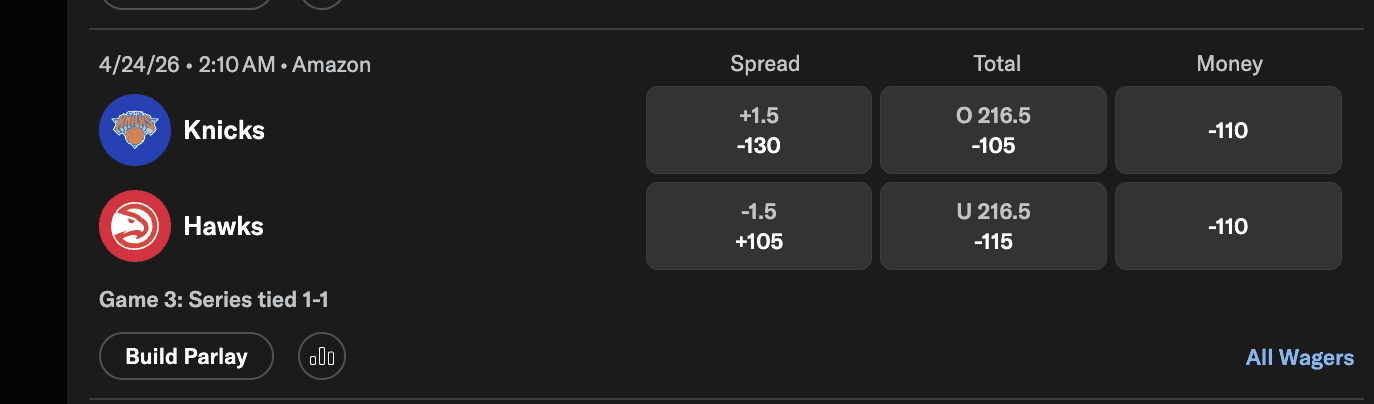
I opened up the moneyline for Knicks (-110) vs Hawks (-110) for Game 3 of the playoffs, and based on the odds alone, I instantly knew my likelihood of winning, how much I stood to return on a $100 bet on New York, and exactly how much juice the sportsbook was quietly skimming off the top.

SportsBoom offers honest and impartial bookmaker reviews to help you make informed choices. While we may earn commissions through affiliate links, our content remains independent and free from promotional influence. For more information, see our Content Transparency and How We Review pages.
How Betting Odds Work in 2026
Don’t worry, Rainman-esque skills aren’t required to glean that information from a glance at the moneyline. In this article I’ll show exactly how odds work at sports betting operators and will have you deciphering lines like a pro in no time!
Sports betting is intended for entertainment purposes only and should never be relied upon as a source of income. Set clear limits on your time and spending, and seek assistance if betting begins to negatively impact your life.
How Betting Odds Work!
What Are Betting Odds?
Betting odds are the language sportsbooks use to communicate three things at once: who they think is more likely to win, how much you'll get paid if you're right, and how much they're charging you for placing the bet.
Oddsmakers employ entire teams of analysts backed by statistical models and years of historical data to set an opening line that reflects the true probability of an outcome as closely as possible, but betting tips from experts can often identify mispriced lines.
Once that line goes live, it shifts based on where money flows. If the public hammers the favorite, the sportsbook nudges the odds to make the underdog more appealing, constantly balancing their exposure so they profit regardless of who wins.
How American Odds Work
American odds come in two flavors: positive and negative.
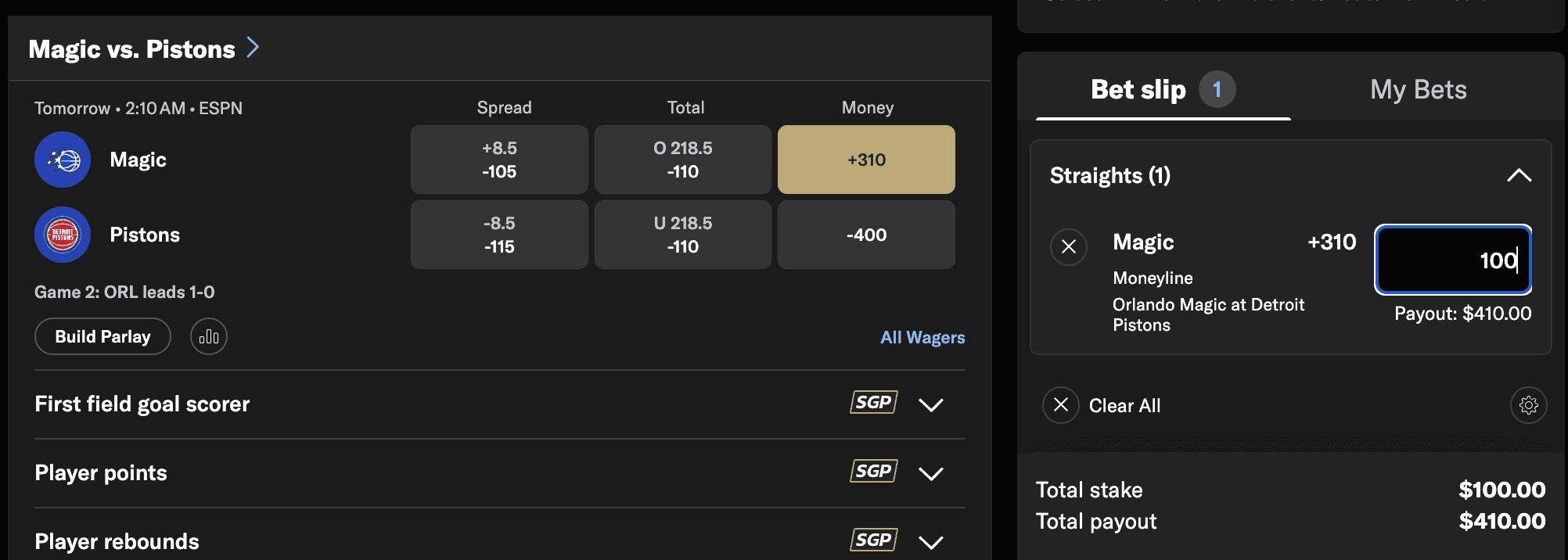
A positive number (e.g. +310) tells you how much profit you'd make on a $100 bet and signals the underdog, while a negative number (e.g. -400) tells you how much you need to bet to make $100 in profit and tells you who the favorite is.
The Detroit Pistons (-400) were big favorites over the Orlando Magic (+310) in their second NBA Playoff game, let’s look at how to calculate your return on a $100 bet.
How American Odds Work expert guide
Bet: $100 on Magic at +310
- Profit if Magic win: $310
- Total payout (stake + profit): $410
- Formula: (Odds / 100) x Stake = (310 / 100) x $100 = $310 profit
Bet: $100 on Pistons at -400
- To win $100 profit, you'd need to stake $400
- But on a flat $100 bet, profit = (100 / 400) x $100 = $25 profit
- Total payout: $125
When you back the favorite at verified NBA sportsbooks, you risk a lot to win a little, but when you bet on the underdog, you risk a little with the chance to win a lot.
Converting Odds to Implied Probability
Implied probability is what the sportsbook's odds suggest the chances of an outcome actually are. It's different from true probability, which is what you believe the real likelihood to be based on your own research and analysis.
As a sharp bettor, your job is to calculate your own probability for outcomes and compare it to the book’s implied probability. When your number is significantly higher than the book’s number, that's when you bet.
Before you can successfully handicap your own lines, you need to know how to calculate implied probability. Fortunately, the formulas are super simple:
For negative odds: Implied probability = |Odds| / (|Odds| + 100) x 100
For positive odds: Implied probability = 100 / (Odds + 100) x 100
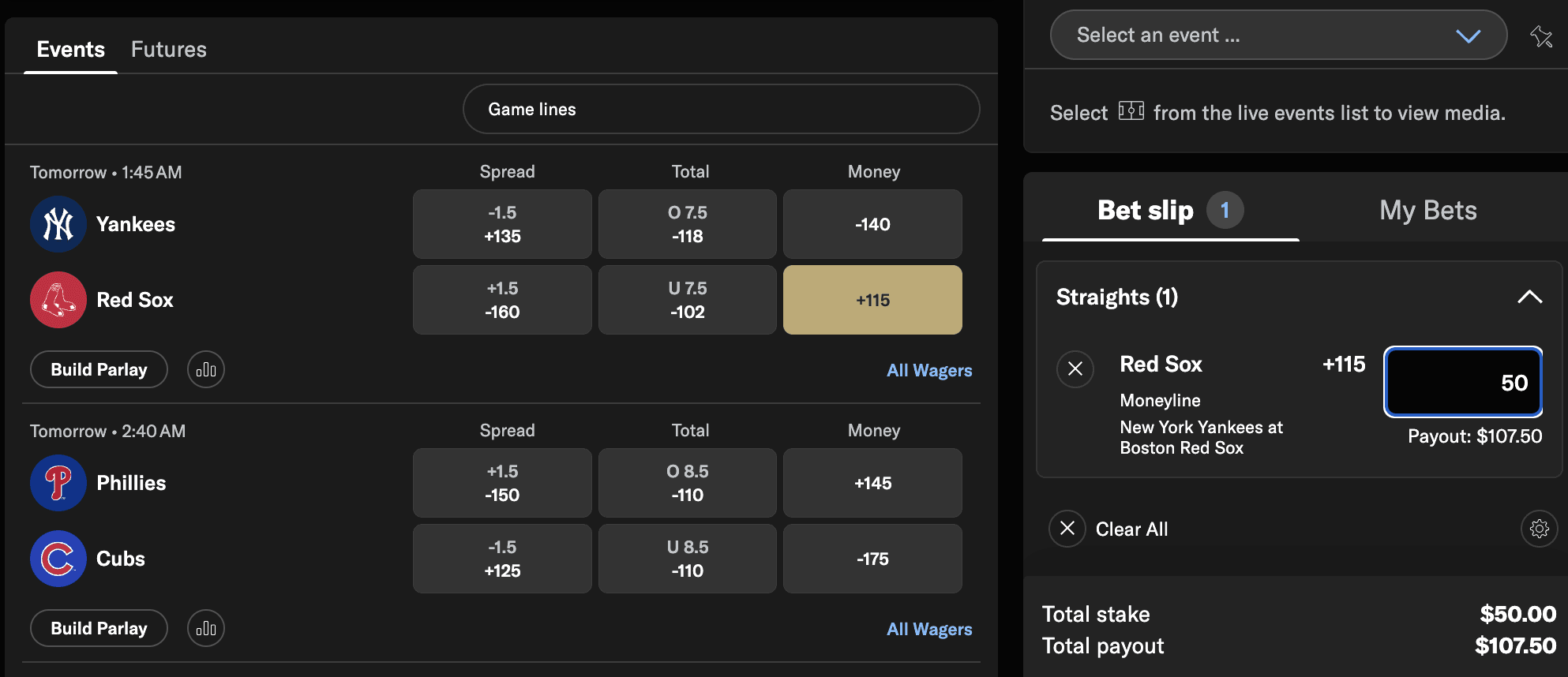
To show you how to crunch the numbers, let’s look at an April 22 game between the Boston Red Sox and the New York Yankees. The moneyline has Boston at -115.
Converting Odds to Implied Probability
Implied probability = 115 / (115 + 100) x 100 = 115 / 215 x 100 = 53.5%
The sportsbook is saying Boston has roughly a 53.5% chance of winning. Now ask yourself: do you believe the Red Sox have better than a 53.5% chance tonight? If yes, you may have found value. If you think it's closer to 50/50, you should pass because the odds aren't in your favor.
Understanding the Sportsbook Margin (Vig)
The thing that most new bettors don't realize is that the sportsbook makes money no matter who wins. They don't care if the Lakers cover or the Rockets blow the total out of the water. Their profit is baked directly into the odds through a built-in commission called the vig (short for vigorish), also known as the juice.
The vig is why you'll rarely see a market priced at +100 / -100 (which would be perfectly fair). The book shades both sides so that the implied probabilities add up to more than 100%. That excess is their margin.
To see BetMGM’s (top NBA and MLS sportsbook) vig on NBA over/under markets, I decided to pull the Lakers vs Rockets, Game 3 Playoffs and the line.
Over 205.5 points: -105 | Under 205.5 points: -115
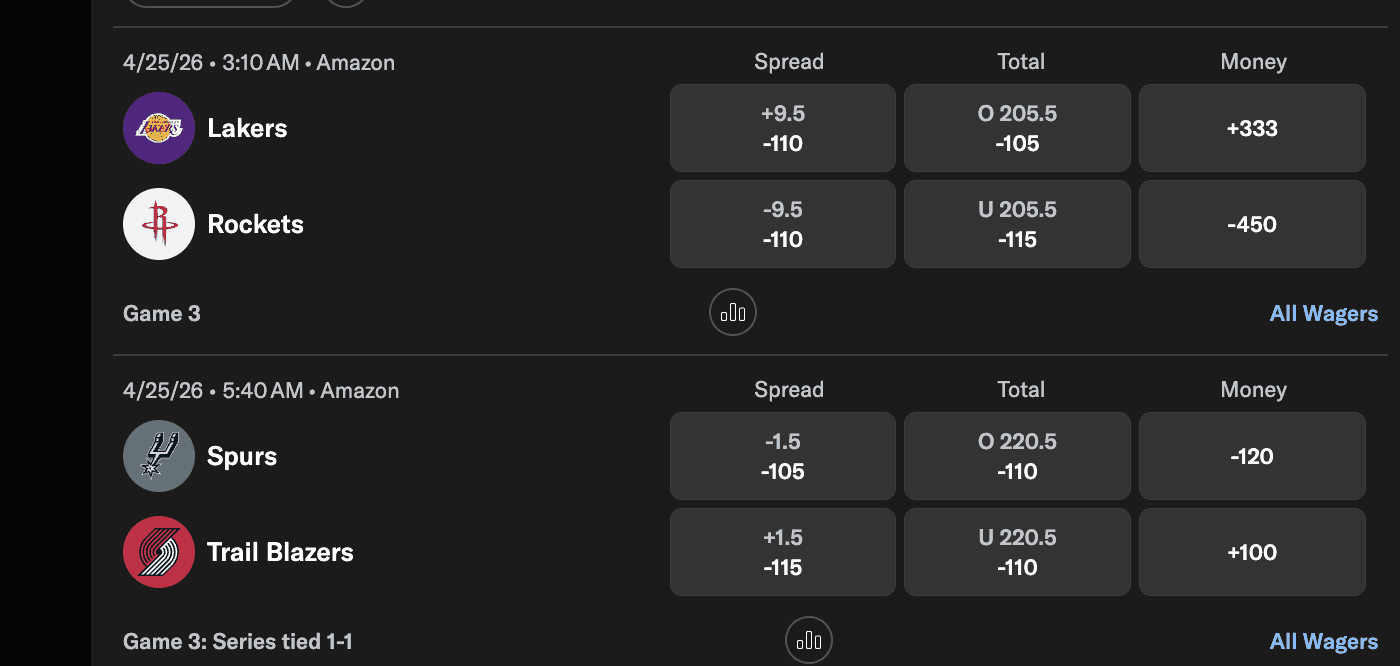
Understanding the Sportsbook Margin!
I ran these calculations to figure out BetMGM’s vig in under 60 seconds.
- Implied probability of the Over: 105 / (105 + 100) x 100 = 51.2%
- Implied probability of the Under: 115 / (115 + 100) x 100 = 53.5%
- Add them together: 51.2% + 53.5% = 104.7%
The market sums to 104.7% instead of 100%. That extra 4.7% is the sportsbook's margin, their guaranteed edge regardless of the outcome. In a balanced market, they'd collect that from both sides.
The higher the vig, the more difficult it is to beat the book over the long term. This is why the pros tend to stick to markets like moneyline, handicap, and over/unders, which usually feature sub-6% vig.
Case Study — Odds vs Outcome
Heading into a first-round series, I looked at the Pistons-Magic matchup and saw Detroit listed as a -390 favorite. I barely blinked and put $100 on the Pistons to cruise. A few hours later, Orlando dominated from tip-off and won 112-101. I was out $100 and found out the hard way why you should never just blindly back favorites in the NBA playoffs.
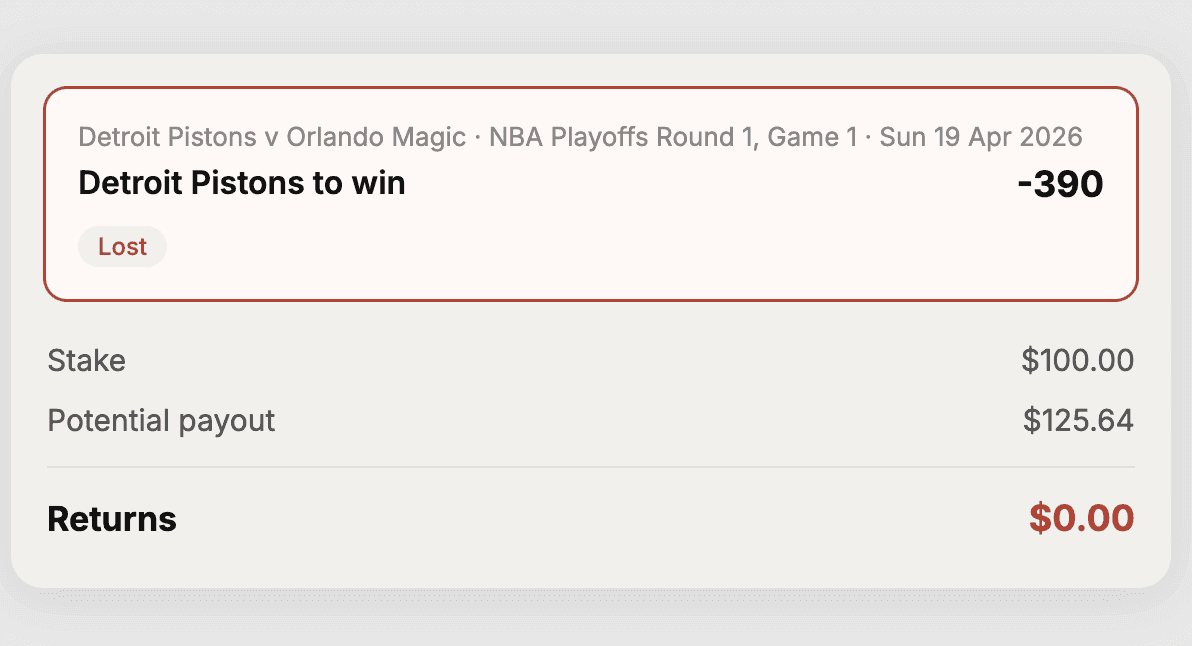
Odds vs Outcome
Before placing the bet, I worked out the implied probability of Detroit winning was 79.6% (390 / (390 + 100) x 100). And my potential profit was just $25.64 with a total payout of $125.64. I was risking $100 to make $25.
I still thought the bet was worth it because of Detroit's second-best Net Rating in the league at 8.4. This is considered the most predictive stat in the NBA, as it measures how much better a team outscores opponents per 100 possessions.
Unfortunately for me, I learned that net rating over the regular season works better over a larger sample of games. The Pistons ended up having an off shooting night, shooting just 40% from the field, and no doubt were rattled by Orlando’s noisy home crowd.
I still expect Detroit to win the series, but individual NBA playoff game results are volatile no matter what the stats tell you.
Conclusion
All in all, betting odds tell you way more than your potential return. With a few basic calculations, you can determine the sportsbook’s vig and the implied probability behind each line, showing you what the book thinks the true chances are.
Once you understand the key information within the odds, you can start creating your own lines and spotting when the price is in your favor.
FAQs
What do + and - odds mean?
Positive odds (e.g. +250) show how much profit you earn on a $100 bet and indicate an underdog. Negative odds (e.g. -180) show how much you must stake to earn $100 in profit and indicate a favorite.
How do you calculate implied probability?
For negative odds, divide the absolute value by itself plus 100. For positive odds, divide 100 by the odds plus 100. Multiply by 100 for a percentage. For example, -200 gives you 200/300 x 100 = 66.7%.
Why do odds change?
Odds shift when heavy money lands on one side, when injury news breaks, or when seasoned bettors move the line. Sportsbooks adjust constantly to balance their liability and protect their margin across both outcomes.
Are favorites safer bets?
Favorites win more often, but their odds already reflect that probability. A -400 favorite winning 70% of the time is actually a poor bet because it needs to win 80% for you to break even. Value matters more than outcome frequency.
Can you beat sportsbook odds long-term?
It's difficult but possible for a small percentage of bettors at trusted NFL betting sites. Success requires consistently identifying odds where your implied probability estimate exceeds the sportsbook's, combined with strict bankroll discipline and line-shopping across multiple books.

Chad Nagel is a passionate sports fanatic who has worked in the sports and betting industry for over a decade. He spent most of his career as an editor-in-chief for Soccer Betting News, South Africa’s leading soccer betting newspaper, owned by Hollywoodbets. His articles have also featured in some of the most respected sports media platforms in the world, such as SPORTbible, Sports Illustrated, Combat Sports UK, and many others.
Comments
0 comments
No comments yet. Be the first to share your thoughts!
Related Resources to Betting Academy
- Best NFL-Themed Slots to Play When There's No Game On
- Future of Casino Loyalty Programs
- How to Build a 15-Leg NFL Parlay with $10
- How to Complete KYC Before NFL Sunday Kickoff
- Why $1 Crash Game Bets Are Popular with US Sports Bettors
- Kalshi’s Masters Trading Surge Shows Sports Becoming a Bigger Growth Engine
- States Are Cracking Down on the Entire Gambling Frontier
- Over/Under Betting: Everything You Need To Know
- Round Robin Betting Guide: How It Works and Key Tips
- Parlay Bets Explained: How They Work and Why They’re Risky
- How Live Betting Affected the Sports Industry
- High Sportsbook Taxes Hurt Bettors Before They Hurt Operators
- How Contract Holdouts Can Help Predict NFL Trades
- Kalshi Notches Legal Win in New Jersey as Sports Prediction Court Battles Rage On
- Why the Future of Sports Prediction Markets Hangs in Balance
- How to Use a Bonus Bet to Hedge an NFL Trade Prediction
- Sports Betting Is Changing the Way Fans Watch the NFL and NBA
- The Best NFL Offseason Markets to Bet On Before the Draft
- Do NFL Trade Rumors Affect the Odds Before the Deal is Officially Confirmed?
- Are All Sportsbook Sponsors in the NFL and NCAA Actually Legal?