
Betting Academy
Moneyline Betting Explained (2026): Odds, EV & Winning Strategy Guide
In the 2025 NFL season, I tracked every game where the underdog was priced at +150 or higher (167 games in total). They won just 25.7% of the time, well below the 40% break-even that +150 requires. Blindly backing every one of them would have cost you -13.5% ROI, a $2,250 loss on $16,700 staked. (Source: Aus Sports Betting) Winning percentage is a vanity metric. A bettor who went 43-124 on those +150 underdogs last season still turned a profit, the one who went 61-106 at -150 didn't. Get your EV calculations right with my expert betting tips and predictions and consistently beat the closing line at popular NFL sportsbooks. Moneyline betting involves financial risk. Long-term results depend on price discipline and probability accuracy. 21+ only.

SportsBoom offers honest and impartial bookmaker reviews to help you make informed choices. While we may earn commissions through affiliate links, our content remains independent and free from promotional influence. For more information, see our Content Transparency and How We Review pages.
Moneyline Betting Explained (2026)
What Is a Moneyline Bet?
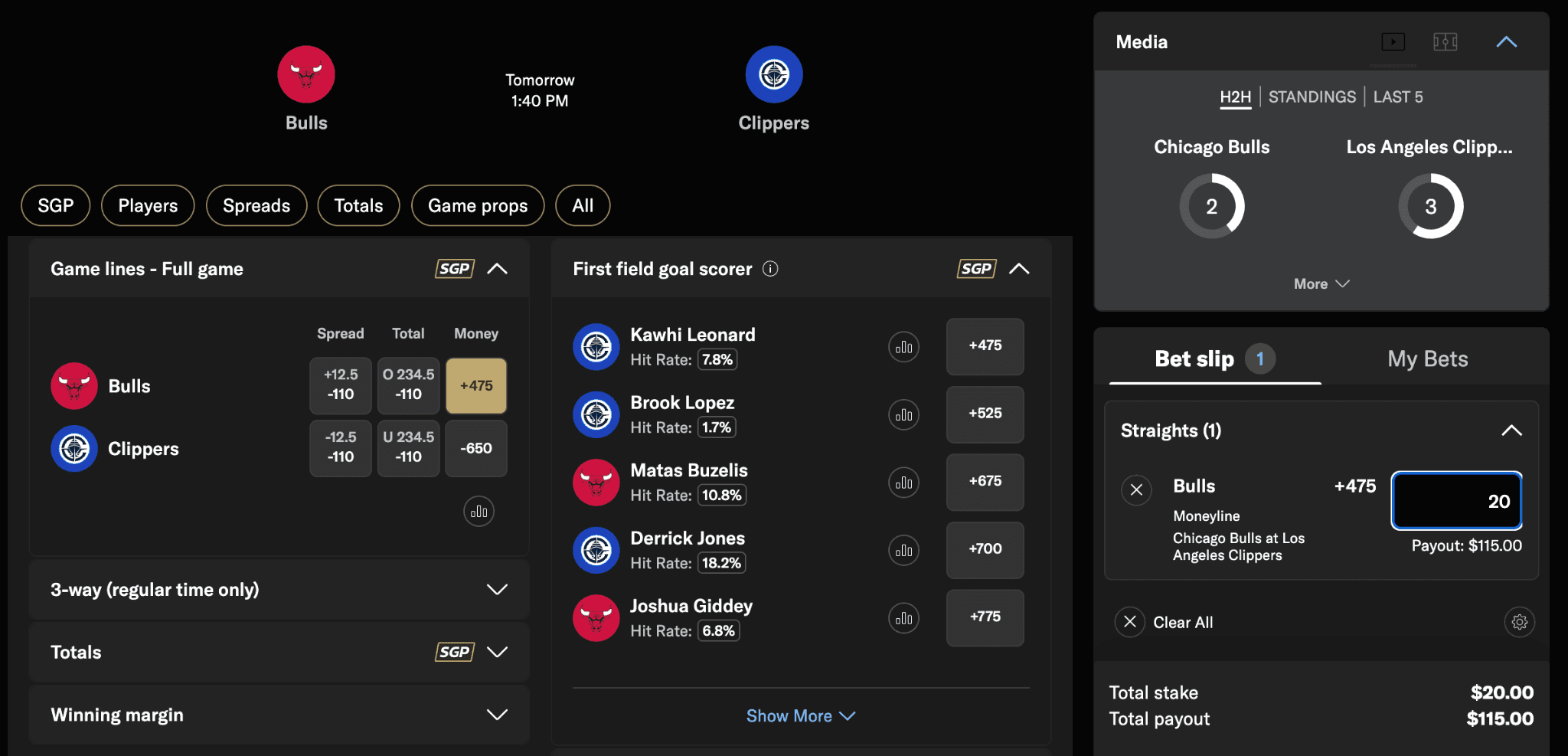
A moneyline bet is a wager on which team will win. The team with the negative odds is the favorite, while the side with the positive is predicted to get the W.
What Is a Moneyline Bet
As you can see, the Clippers were huge favorites at BetMGM, one of the best NBA betting platforms (-650) against the Bulls (+475) on March 13, but seeing as Giddey and Buzelis are in great form, I decided to bet $20 on Chicago, the $115 potential return was too good to pass up!
Two-Way vs Three-Way Moneylines
A two-way moneyline, as the name suggests, means you bet on Team A or Team B to win, and if the match ends in a draw, it’s a push and your stake is refunded. As you can see below in a two-way moneyline, Toronto FC are paying -120 and New York Red Bulls -118 at MLS sportsbooks.
Alternatively, you can opt for a three-way moneyline where you can now also bet on the match ending in a draw. If you, for example, back Toronto in a three-way moneyline and the game ends 1-1, your bet loses and you won’t receive your stake back. As soccer matches often end in a draw, the odds for backing either team to win are much higher than in a 2-way market.
How American Odds Work (+ and -)
How American Odds Work
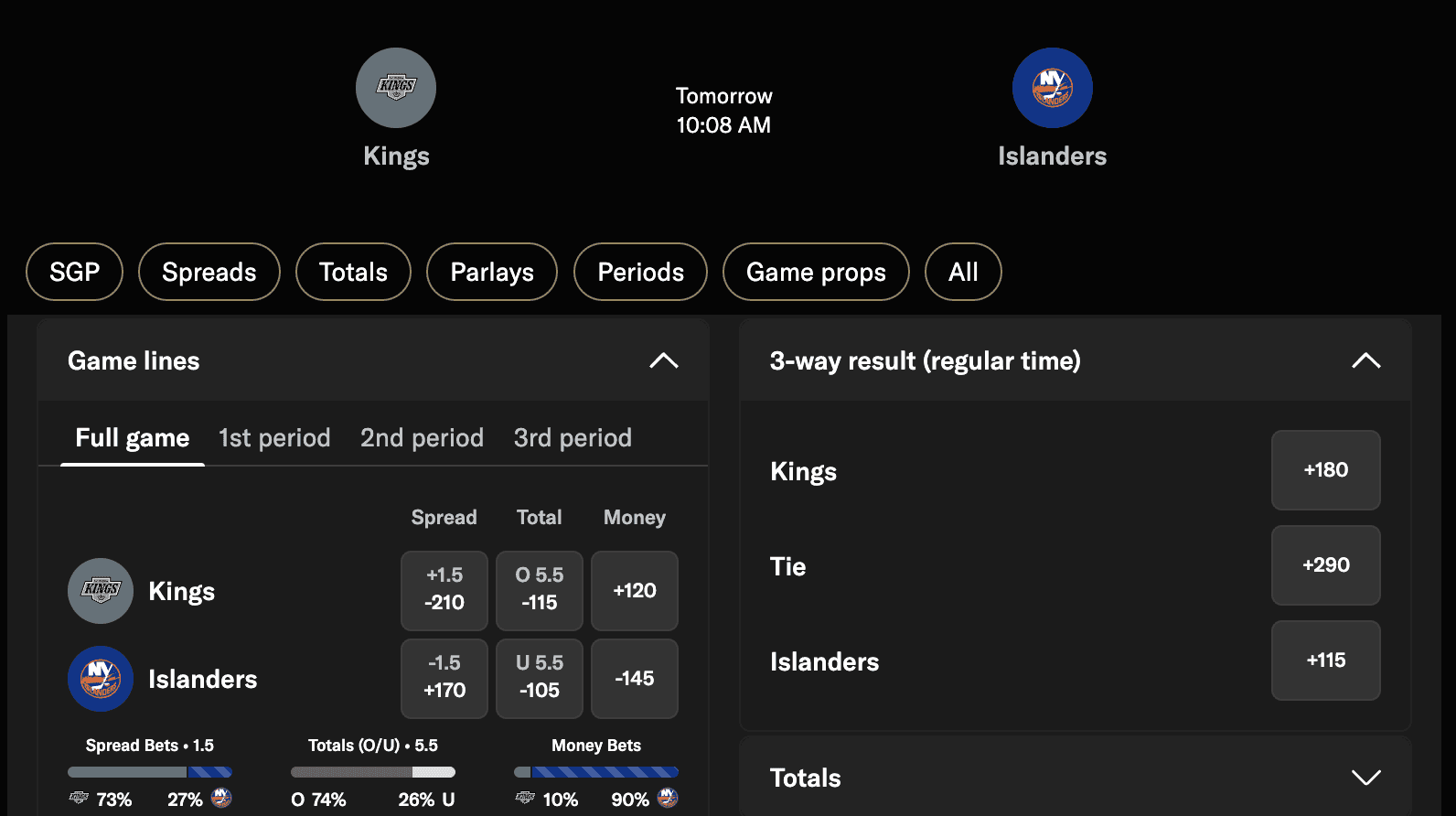
Every moneyline bet has two sides: a favorite (negative odds) and an underdog (positive odds). Let’s look at the Kings vs. Islanders NHL game on March 14 to see how this works in real life:
The Los Angeles Kings at +120 are the underdog. The + sign means profit on a $100 stake. Bet $100 on the Kings, and a win returns $220 total.
The New York Islanders at -145 are the favorite. The − sign means how much you must risk to win $100. To profit $100 on the Islanders, you'd need to stake $145, getting back $245 total if they win.
Converting American Odds to Implied Probability
Converting American Odds to Implied Probability
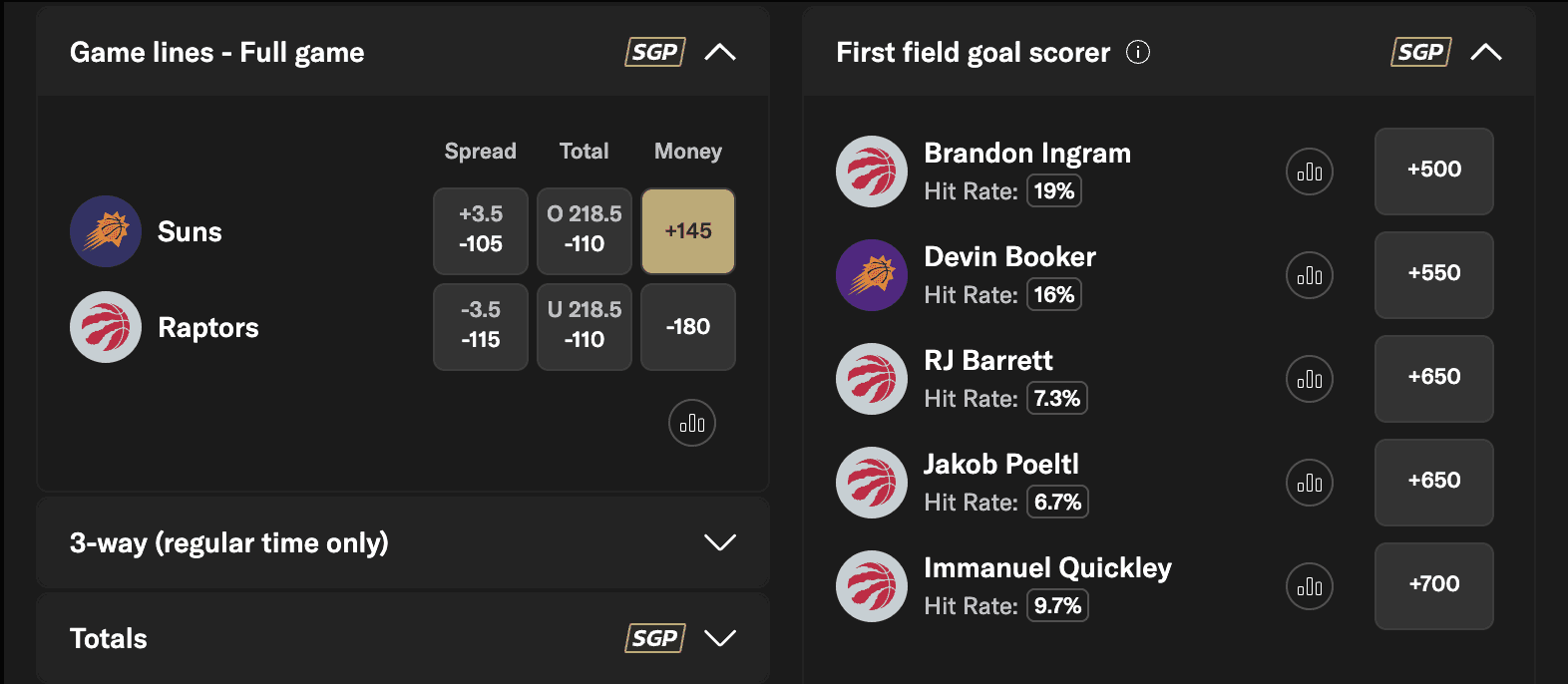
With the Raptors hosting the Suns on March 13, 2026, this is how I determined which team to bet on by converting the odds to implied probability:
For positive (+) odds - Suns at +145: divide 100 by (the odds + 100)
100 ÷ (145 + 100) = 100 ÷ 245 = 40.8%
For negative (−) odds - Raptors at -180: divide the odds by (the odds + 100), ignoring the minus sign
180 ÷ (180 + 100) = 180 ÷ 280 = 64.3%
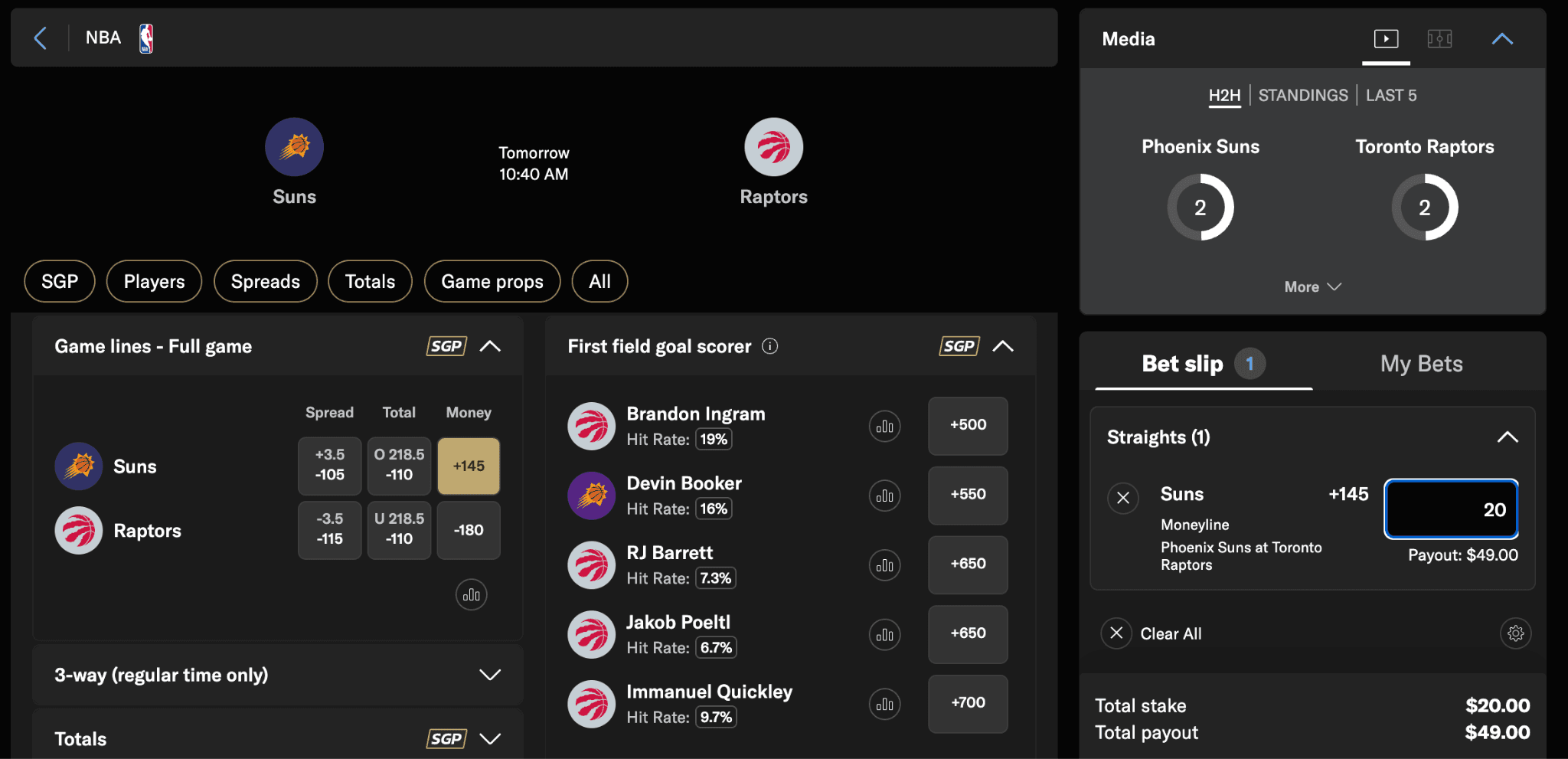
Based on the Suns' riding a 4-game win streak and hosting the Raptors, I thought they had at least a 50% chance of winning, much higher than the 40.8% implied probability, so I decided to bet $20 on them.
Break-Even Win Rate (Critical Concept)
Your break-even win rate is the minimum percentage of bets you must win to avoid losing money, and it shifts entirely based on the odds you're taking.
The formula:
- For negative odds: Risk ÷ (Risk + Profit)
- For positive odds: 100 ÷ (Odds + 100)
Using the earlier example of the Islanders vs Kings:
Islanders at -145: you're risking $145 to win $100, so:
145 ÷ (145 + 100) = 59.2%
You must win nearly 6 in every 10 Islanders bets just to break even.
Kings at +120: risking $100 to win $120, so:
100 ÷ (120 + 100) = 45.5%
The Kings only need to win 45.5% of the time for this bet to break even.
Understanding the Sportsbook Margin (Vig)
The vig (or juice) is the sportsbook's built-in commission. Rather than offering fair odds, they shade both sides so the combined implied probabilities add up to more than 100%.
Understanding the Sportsbook Margin
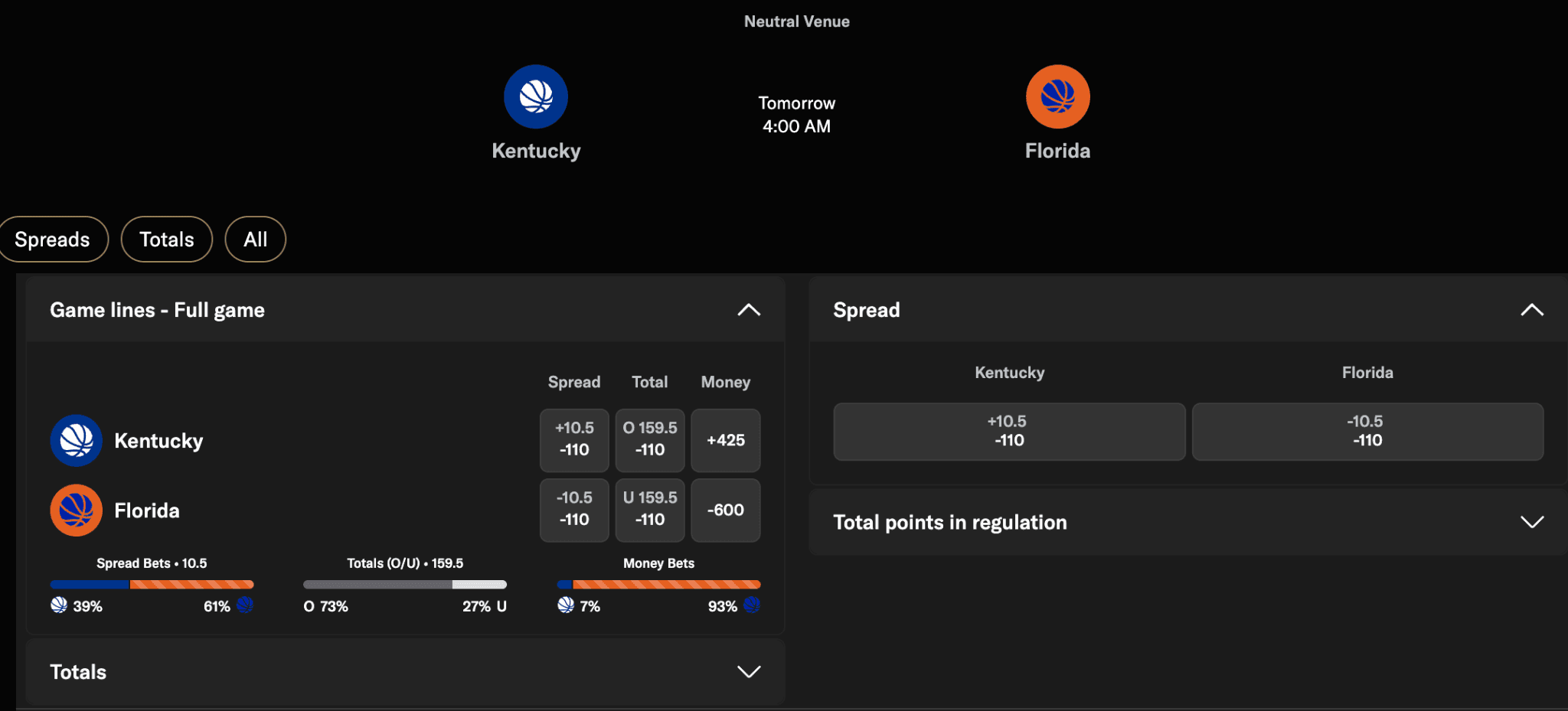
To check out how much vig BetMGM typically bakes into its NCAA basketball lines, I pulled up a game between Kentucky and Florida on March 13. To calculate the margin, simply:
Kentucky at +425:
100 ÷ (425 + 100) = 19%
Raptors at -600:
600 ÷ (600 + 100) = 85.7%
Add them together: 40.8% + 64.3% = 104.7%
That extra 4.7% is the vig. In a no-margin market, both sides would total exactly 100%. The sportsbook inflates each side slightly, ensuring they turn a profit.
Expected Value (EV) in Moneyline Betting
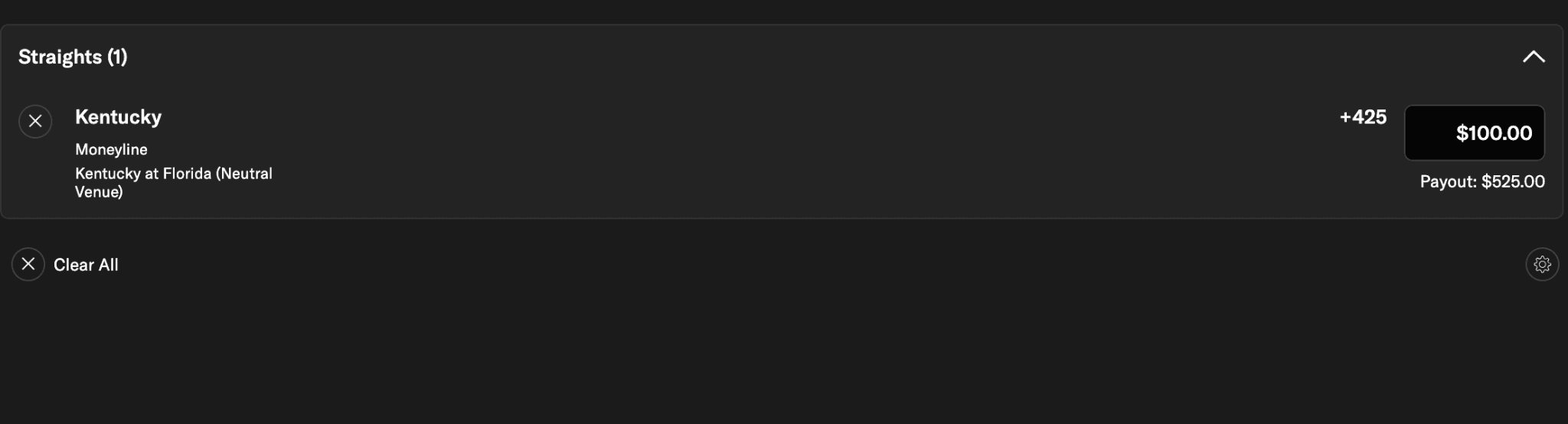
Expected value tells you whether a bet is mathematically profitable over time. Using the same Florida vs Kentucky game:
Kentucky are priced at +425, implying a 19% win probability. But let's say your research suggests Kentucky actually have a 25% true chance of winning. Here's the EV calculation on a $100 bet:
EV = (Win Probability × Profit) − (Loss Probability × Stake)
(0.25 × $425) − (0.75 × $100) $106.25 − $75.00 = +$31.25
A positive EV of +$31.25 means that for every $100 wagered on Kentucky at +425, you'd expect to profit $31.25 on average over many bets.
Expected Value (EV) in Moneyline Betting
Now flip it, if your research actually agrees with the book and Kentucky's true probability is only 19%:
(0.19 × $425) − (0.81 × $100) $80.75 − $81.00 = −$0.25
This scenario is essentially breakeven, with a slight negative variance.
Closing Line Value (CLV) — Why It Matters
Closing Line Value (CLV) is the difference between the odds you bet and the final odds at game time. The formula to calculate CLV is (Your Odds/Closing Odds - 1) x 100. So if you back a team at -140 and the line closes at -148, your CLV is 5.4%.
Sharp betting sites like Pinnacle’s closing lines are the most accurate predictors of true probabilities in moneyline markets. So your CLV will be your ROI over the long term. However, consistently generating CLV is the tricky part.
Favorites vs Underdogs — Risk & Psychology
Public bettors consistently back favorites, which leads to inflated odds. This herd mentality is why if you blindly back favorites in NFL moneyline markets, you’ll lose 3% of your bankroll. Unfortunately, betting on every underdog is also a losing strategy. If you wagered $100 on every NFL underdog since 2003, you’d be down ~$24,141 (-4.3% ROI).
In NFL moneyline betting, the edge favors slight underdogs. Dogs at +3 or shorter win ~44-46% outright since 2003. At +130 to +160 odds, this win rate supports long-term profit via favorable payouts. When it comes to the NBA, extreme underdogs with sub-20% implied probabilities tend to outperform.
The Heavy Favorite Trap (-300 and Beyond)
The data from over 28,000 NBA games exposes exactly why heavy favorites destroy bankrolls long-term. At -300, favorites won 73.3% of 1,295 games, but your break-even rate at that price is 75%.
It gets worse as the price rises. At -459 favorites won 81.6% across 882 games, but break-even at that price requires 82.1%. The bigger the favorite, the wider the gap between the implied probability and the breakeven win rate.
When Moneylines Make More Sense Than Spreads
The NFL data across 4,000+ games gives a clear answer: moneyline beats the spread at mid-range favorites between -3.5 and -6 and loses its edge beyond that.
At a -3.5 spread (-175 moneyline), favorites win 65.7% of games but cover only 51.5%. The favorite wins outright far more often than they cover, meaning the spread punishes you for a narrow victory. Taking the moneyline at -175 is the smarter play.
At -6 (≈ -250 moneyline), favorites win 69% but cover just 46.8%. Nearly 7 in 10 games go to the favorite outright, yet they fail to cover more than half the time. The moneyline is the obvious choice.
The crossover point hits at -7. Favorites win 75.6%, but as established, -300 requires 75% just to break even.
When I Avoid Moneyline Betting
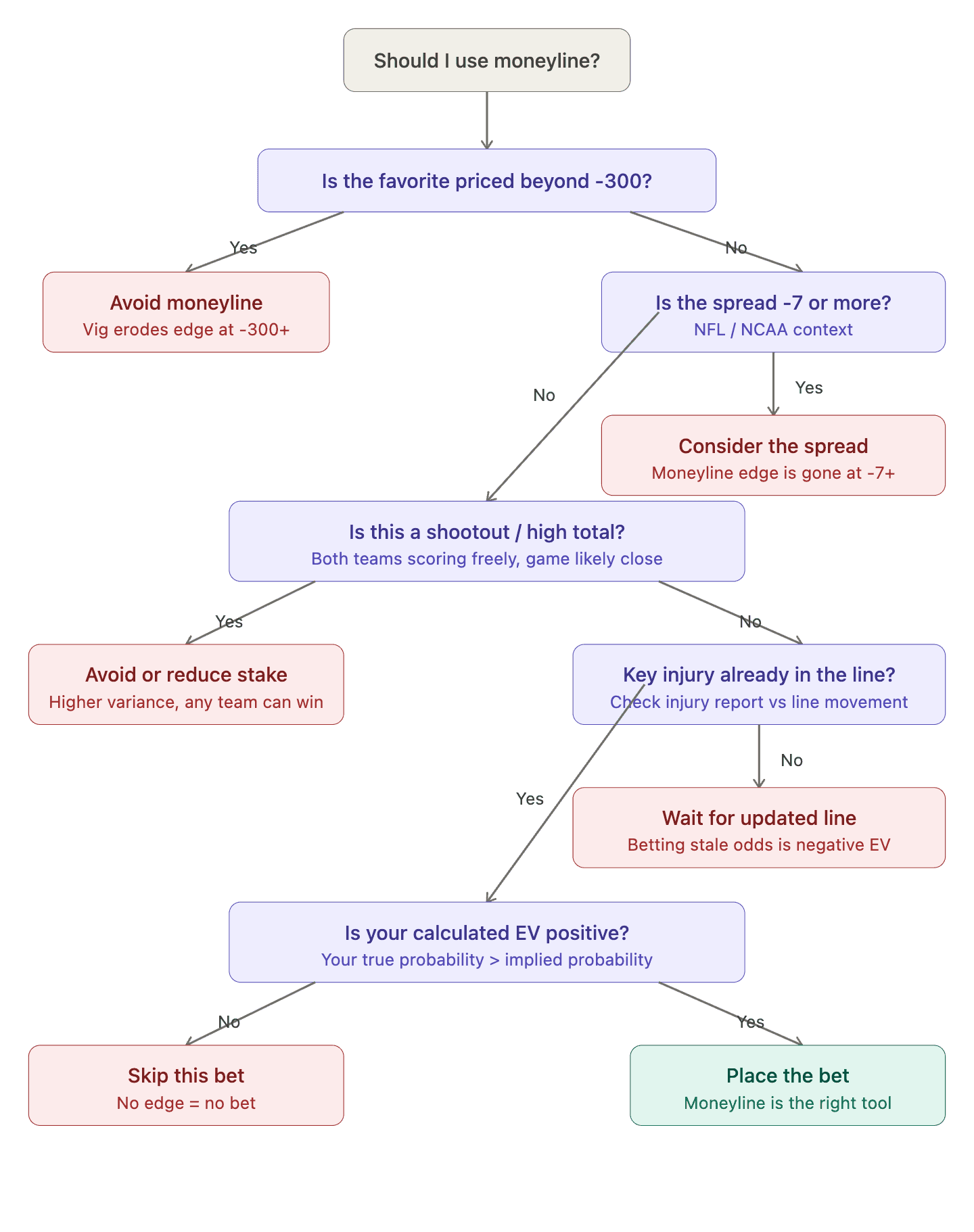
I’ve created a decision tree, so I know exactly when to pull the trigger on a moneyline bet. Feel free to copy it:
When I Avoid Moneyline Betting
Common Moneyline Betting Mistakes
Common Moneyline Betting Mistakes
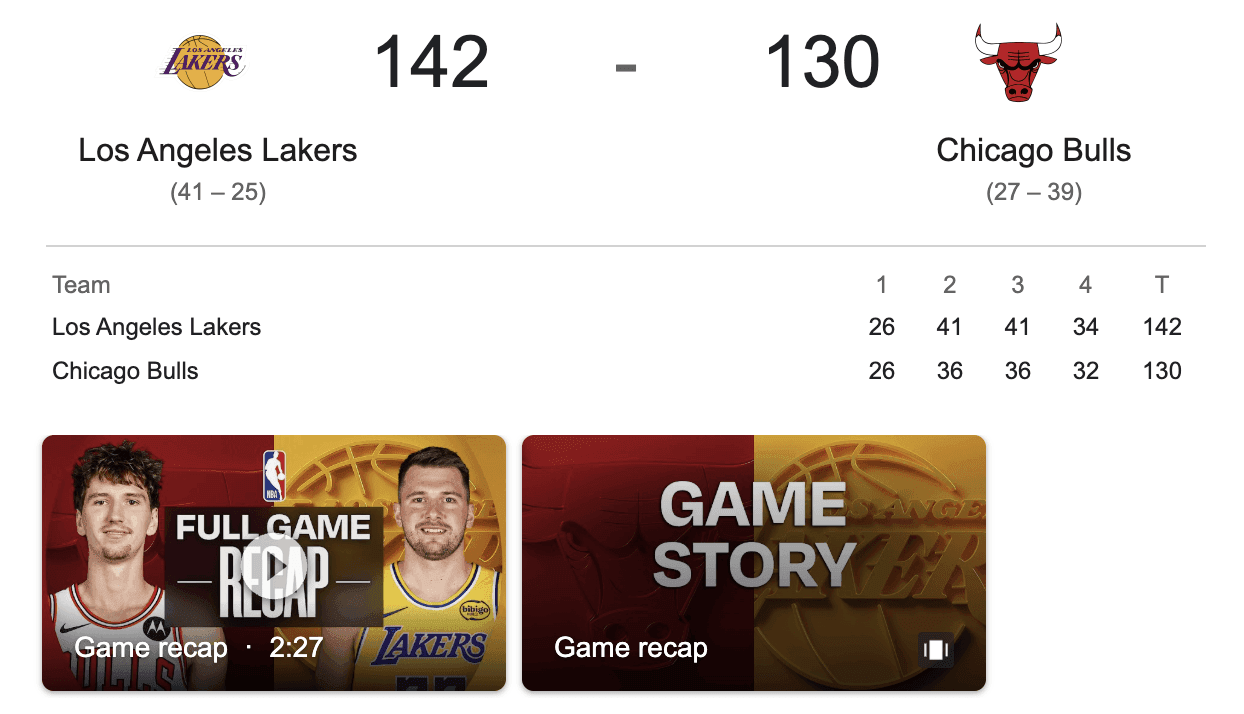
I learned one of these lessons the hard way on March 13. I'd watched Giddey orchestrate offense and Buzelis bully his way through defenders all week, so I faded the Lakers and backed the Bulls at +475.
Doncic posted 51 points, 10 rebounds, and 9 assists as the Lakers cruised to a 142-130 win. I'd zeroed in on Chicago's upside and completely blanked on the guy averaging 32.8 points per game on the other side. These are the key moneyline mistakes you need to avoid:
- Fixating on one side of the matchup. This is exactly what burned me with the Bulls. I built a case around Giddey and Buzelis without properly stress-testing the counterargument.
- Treating recent form as the whole story. A team riding a 5-game win streak is easy to back, but who did they beat?
- Ignoring line movement and what it signals. If you locked in a favorite at -160 and the line has since moved to -185, sharp money has come in after you, which means you're likely on the right side.
- Backing the same side publicly hyped teams all week. When a team gets three days of ESPN coverage after a big win, the public hammers them, and the book shades the line accordingly.
- Conflating "likely to win" with "worth betting." A -280 favorite probably wins. But at -280, your break-even is 73.7%, and if they only win 70% of the time, you're bleeding money slowly.
My Moneyline Evaluation Checklist
Before I place a moneyline bet, I ask myself these questions:
- Is the calculated EV positive?
- Has the line moved in my favor since opening?
- Am I likely beating the closing line?
- Does my team have a situational edge not yet priced in?
- Am I betting within my unit size?
- Would I still take this bet if the odds shifted 10 cents against me?
Final Thoughts — Probability Over Emotion
The moneyline looks simple: pick a winner, collect. But as the data shows, blindly backing favorites loses you 3% of your bankroll, and blindly backing underdogs loses you 4.3%.
To generate an edge, you need to find spots where your probability estimate beats the book's implied probability and have the discipline to walk away when it doesn't.
FAQs
Are moneyline bets safer than spreads?
Moneylines carry less risk because your team simply needs to win. However, heavy favorite moneylines risk large stakes for small returns, so in that scenario, you may get better odds by placing a spread bet.
How often do favorites win?
Favorites win 60% to 70% of the time. For example, moneyline NFL bets won 66.6% of the time since 2018, while over the last 10 seasons, NBA moneyline wagers have a 68% win rate.
Is betting on underdogs profitable long-term?
Betting slight underdogs (+130 to +165) is a profitable strategy in the NFL, while betting large NBA underdogs (implied probability of 20% or below) can also work.
What is a good break-even percentage?
It depends entirely on the odds. At +150, you only need to win 40% of bets to break even. At -300, that jumps to 75%. A -150 favorite requires 60% wins, while a +200 underdog just 33.3%.
Why does beating the closing line matter?
The closing line reflects every piece of available information (injuries, weather, sharp money), making it the market's most efficient number. Consistently getting odds better than the closing line means you're on the right side of value.

Bruce Douglas has more than a decade of experience in sports and news media, working across print and digital platforms.
Comments
0 comments
No comments yet. Be the first to share your thoughts!
Related Resources to Betting Academy
- Round Robin Betting Guide: How It Works and Key Tips
- Parlay Bets Explained: How They Work and Why They’re Risky
- How Live Betting Affected the Sports Industry
- High Sportsbook Taxes Hurt Bettors Before They Hurt Operators
- How Contract Holdouts Can Help Predict NFL Trades
- Kalshi Notches Legal Win in New Jersey as Sports Prediction Court Battles Rage On
- Why the Future of Sports Prediction Markets Hangs in Balance
- How to Use a Bonus Bet to Hedge an NFL Trade Prediction
- Sports Betting Is Changing the Way Fans Watch the NFL and NBA
- The Best NFL Offseason Markets to Bet On Before the Draft
- Do NFL Trade Rumors Affect the Odds Before the Deal is Officially Confirmed?
- Are All Sportsbook Sponsors in the NFL and NCAA Actually Legal?
- How to Bet NFL Trades & Free Agency Before Odds Move?
- How Draft Betting Markets Work: Odds, EV & Insider Signals
- Same Game Parlays Explained
- Best Bets for College Basketball – Thursday, March 12
- Best Bets for NCAA Men’s Basketball – Monday, March 9
- Best Bets for NCAA Men’s Basketball – Friday, March 6
- Best Bets for NCAA Men’s Basketball – Thursday, March 5
- Why Every Betting System is Garbage