
Betting Academy
Parlay Betting Explained: Hidden Vig, EV & Real Profit Math
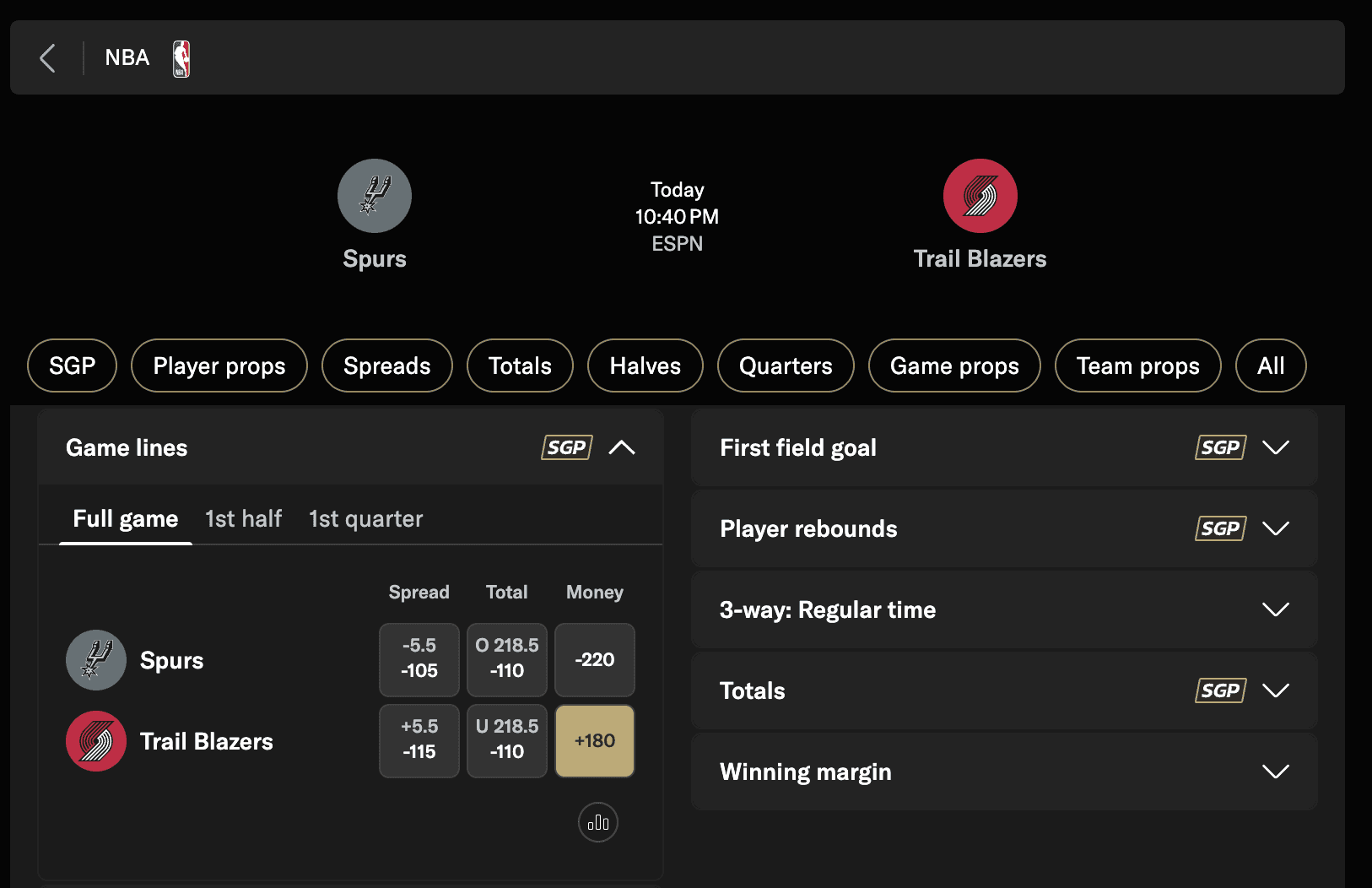
Last week I built what seemed like a smart $50 three-leg moneyline parlay: Trail Blazers +180, Celtics -300, Lakers +154. The parlay odds came back at +848 for a potential payout of $474.13, nearly 10x my money on three teams I liked.

SportsBoom offers honest and impartial bookmaker reviews to help you make informed choices. While we may earn commissions through affiliate links, our content remains independent and free from promotional influence. For more information, see our Content Transparency and How We Review pages.
Parlay Betting Explained!
Then I sat down and did the actual math. The vig baked into that single ticket was 14.4%. I was handing the sportsbook a bigger cut than a Vegas slot machine before the games even tipped off. This is exactly how that happens and what the numbers really look like!
Are Parlays the Biggest Trap in Sports Betting
Expected Return: The Math That Should Stop You Cold
To see this in dollar terms, you need the true (no-vig) probability of all three legs winning, which can be done by stripping the vig from each leg first:
- Trail Blazers true probability: 35.71 ÷ 104.46 = 34.18%
- Celtics true probability: 75.00 ÷ 104.41 = 71.84%
- Lakers true probability: 39.37 ÷ 104.89 = 37.54
True parlay probability: 0.3418 x 0.7184 x 0.3754 = 9.22%
Expected Return
When you convert the implied probability back to the American odds, you get +985. However, BetMGM was only offering me +848. That gap works out to be a negative expected return of 12.6%.
EV = (9.22% x $424.13 profit) − (90.78% x $50 stake) = $39.10 − $45.39 = −$6.29 per $50 ticket
If you place five of these a week, you're mathematically donating around $163 a month before a single whistle blows!
What Happens With a Real Edge — Parlay vs. Straight Bets
Let's say you've done serious research and you have a real 3% edge on each leg and you believe each team's true win probability is 3 percentage points higher than what the sportsbook's odds imply:
- Trail Blazers: 35.71% + 3% = 38.71%
- Celtics: 75.00% + 3% = 78.00%
- Lakers: 39.37% + 3% = 42.37%
Parlay win probability with edge: 0.3871 x 0.7800 x 0.4237 = 12.79%
Parlay EV: (12.79% x $424.13) − (87.21% x $50) = $54.25 − $43.61 = +$10.64 on a $50 stake (+21.3% ROI)
Now compare that to placing the same three bets as individual straight wagers of $50 each:
- Trail Blazers +180: (38.71% x $90) − (61.29% x $50) = $34.84 − $30.65 = +$4.19
- Celtics - 300: (78.00% x $16.67) − (22.00% x $50) = $13.00 − $11.00 = +$2.00
- Lakers +154: (42.37% x $77) − (57.63% x $50) = $32.63 − $28.82 = +$3.81
So, from a total stake of $150 (3 x $50), you’re looking at a $10 return and a +6.7% ROI. In contrast, the parlay with edge produces the same absolute return but 3x the ROI, as it only risks $50 instead of $150.
Parlays amplify whatever you bring them. When you create a ticket with negative expected value, it compounds your losses. However, if you stack it with +EV legs, it compounds your gains while requiring less capital at risk.
Conclusion
Parlays are not inherently a trap. For a bettor with a measurable edge on individual markets, they are a mathematically valid way to amplify returns and reduce required capital compared to straight betting.
However, for the vast majority of recreational bettors who don’t have an edge, they are the most efficient mechanism sportsbooks have ever built to extract money at scale. My Trail Blazers/Celtics/Lakers ticket was paying +848 in green, but what it didn't show was the 12.56% compounded vig and a $6.29 expected loss on every $50 ticket.
Before you build your next parlay, multiply the overrounds, calculate the true probability, and ask yourself honestly whether you have a real 3% edge on every leg, if not, stick to singles!

Chad Nagel is a passionate sports fanatic who has worked in the sports and betting industry for over a decade. He spent most of his career as an editor-in-chief for Soccer Betting News, South Africa’s leading soccer betting newspaper, owned by Hollywoodbets. His articles have also featured in some of the most respected sports media platforms in the world, such as SPORTbible, Sports Illustrated, Combat Sports UK, and many others.
Comments
0 comments
No comments yet. Be the first to share your thoughts!
Related Resources to Betting Academy
- What does “Free Bet” Mean in Gambling Marketing?
- Teaser Betting Explained: Odds, Spreads & Strategy
- NFL Interim Coach Bump: What the Data Actually Says
- Here’s how a Hamstring Injury During an NFL Game Impacts Spread
- How Online Casino Games Can Keep NFL Bettors Engaged Between Games
- Best NFL-Themed Slots to Play When There's No Game On
- Future of Casino Loyalty Programs
- How to Build a 15-Leg NFL Parlay with $10
- How to Complete KYC Before NFL Sunday Kickoff
- Why $1 Crash Game Bets Are Popular with US Sports Bettors
- Kalshi’s Masters Trading Surge Shows Sports Becoming a Bigger Growth Engine
- States Are Cracking Down on the Entire Gambling Frontier
- Over/Under Betting: Everything You Need To Know
- Round Robin Betting Guide: How It Works and Key Tips
- Parlay Bets Explained: How They Work and Why They’re Risky
- How Live Betting Affected the Sports Industry
- High Sportsbook Taxes Hurt Bettors Before They Hurt Operators
- How Contract Holdouts Can Help Predict NFL Trades
- Kalshi Notches Legal Win in New Jersey as Sports Prediction Court Battles Rage On
- Sports Betting Is Changing the Way Fans Watch the NFL and NBA