
Betting News
Caesars Entertainment Digital Profits Surge as Las Vegas Strip Struggles
Caesars Entertainment grew Q3 2026 revenue by 2.5% to $2.94 billion, but net losses more than doubled to $123 million as the Las Vegas Strip slump and rising interest costs weighed on results. Regional casinos and digital betting delivered growth, offering a mixed picture ahead of Fertitta Entertainment’s proposed $17.6 billion takeover.

SportsBoom offers honest and impartial bookmaker reviews to help you make informed choices. While we may earn commissions through affiliate links, our content remains independent and free from promotional influence. For more information, see our Content Transparency and How We Review pages.
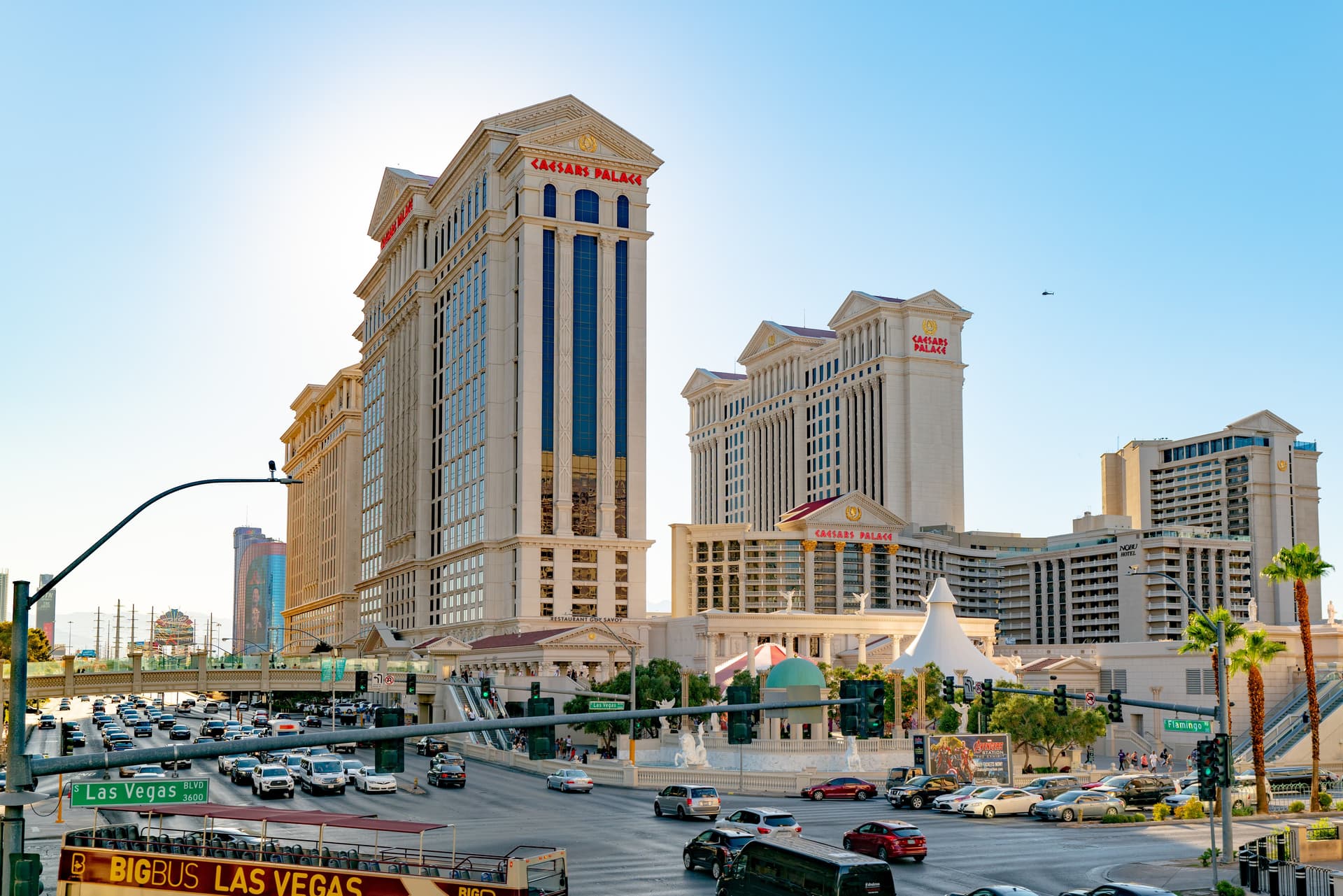
Credit: Getty Images
Caesars Entertainment grew revenue 2.5% to $2.94 billion in Q3 2026, but its net loss more than doubled to $123 million as the Las Vegas Strip slump dragged on and interest costs kept eating into the bottom line.[1]
The results, released on October 27, are among the last Caesars will post as a public company.[2] Fertitta Entertainment's $17.6 billion takeover, announced on May 28, is expected to close by mid 2027, after which Caesars stock will be delisted from NASDAQ. There was no earnings call this quarter because of the pending deal.
The pattern is now familiar. Regional casinos and Caesars Digital grew; Las Vegas shrank. But a closer look at the company's SEC filings shows the Vegas problem sits mostly outside the casino floor, and that the digital business is getting more profitable while its biggest rivals spend heavily on prediction markets.
How did each Caesars segment perform in Q3?
Regional casinos generated more than half of Caesars' revenue and the largest share of its earnings. Digital posted the fastest profit growth.
| Segment | Q3 revenue | YoY | Q3 adjusted EBITDA | YoY | Q3 net income |
|---|---|---|---|---|---|
| Regional | $1,627m | +5.9% | $524m | +3.6% | $66m |
| Las Vegas | $930m | -2.3% | $343m | -9.5% | $79m |
| Caesars Digital | $326m | +4.8% | $44m | +57.1% | $4m (from -$21m) |
| Managed and Branded | $58m | -20.5% | $17m | -5.6% | $16m |
| Caesars total | $2,940m | +2.5% | $865m | -2.1% | -$123m (from -$55m) |
Across the first nine months of 2026, revenue rose 2.7% to $8.80 billion, adjusted EBITDA slipped 1.9% to $2.67 billion, and the net loss widened to $283 million, or $1.39 per share.
Is the Las Vegas slump really a gambling problem?
Not on this quarter's evidence. Caesars' Las Vegas casino revenue actually rose 10.4% to $287 million. The damage came from hotel rooms and restaurants.
Hotel and dining revenue fell by a combined $61 million, more than double the $27 million gain on the casino floor. Caesars' 10-Q points to fewer leisure visitors and a softer events calendar, which pushed down occupancy and room rates.
Even the casino gain needs a caveat. Table drop rose 8.1% to $711 million and slot handle climbed 3% to $2.62 billion, so players did turn up. But hold was 4.2 points higher than a year ago. On SportsBoom's rough calculation, that alone is worth around $30 million in extra table win, roughly the size of the whole casino revenue increase.
The Strip segment's adjusted EBITDA margin narrowed from 39.8% to 36.9%, and net income fell 40% to $79 million.
| Las Vegas line | Q3 2026 | Q3 2025 | Change |
|---|---|---|---|
| Casino revenue | $287m | $260m | +10.4% |
| Hotel revenue | $263m | $290m | -9.3% |
| Food and beverage revenue | $236m | $270m | -12.6% |
| Hotel occupancy | 89.1% | 91.6% | -2.5 pts |
| Table games hold | 21.6% | 17.4% | +4.2 pts |
Why do the regional casinos matter so much to Fertitta?
Because they are where Caesars makes most of its money. Regional adjusted EBITDA of $524 million was equivalent to about 61% of the group total in Q3, against roughly 40% from Las Vegas.
Caesars runs 54 properties across 20 North American jurisdictions, and 46 of them sit outside Las Vegas. Regional revenue rose 5.9% to $1.63 billion in the quarter, and net income climbed nearly 18% to $66 million.
That footprint is also where antitrust questions could arise. Fertitta's Golden Nugget brand runs eight US casinos, seven outside Las Vegas, and the two groups already compete in six markets:
- Lake Tahoe, Nevada
- Laughlin, Nevada
- Atlantic City, New Jersey
- Lake Charles, Louisiana
- Danville, Illinois
- Biloxi, Mississippi
The Federal Trade Commission asked for more information on the merger on September 17, extending its review by at least 30 days. Shareholders approved the deal with 65% support on September 22. Caesars CEO Tom Reeg said at G2E that he would not be surprised to see a property or two sold to get the deal over the line, as happened when Eldorado bought Caesars in 2020.
Is Caesars Digital winning by staying out of prediction markets?
It is certainly getting more profitable. Caesars Digital's adjusted EBITDA jumped 57% to $44 million on revenue up 4.8% to $326 million, lifting its margin from about 9% to 13.5%. The segment swung from a $21 million net loss to a $4 million profit.
The nine-month picture is stronger still. Digital revenue reached $1.05 billion, up 6.3%, adjusted EBITDA rose 20% to $181 million and net income almost tripled to $53 million. Caesars offers online sports betting in 28 North American jurisdictions and iGaming in six.
Digital is still a small slice of the earnings pie, though. It brought in about 11% of group revenue in Q3 but only around 5% of adjusted EBITDA.
That growth has come without any move into event contracts. FanDuel, DraftKings and Fanatics have all pushed into prediction markets with heavy investment and costly acquisition campaigns, while Caesars has stayed out. Reeg and MGM CEO Bill Hornbuckle both said at G2E that entering the space could put their state gaming licenses at risk.
Reeg also took aim at Kalshi for listing contracts on whether Caesars would be acquired.
“There was nowhere in their rules that said I couldn't place a bet," he told the G2E audience. He separately warned that weak oversight could produce a scandal that damages the reputation of the wider gaming industry.
The door is not shut for good. On a previous earnings call, Reeg said Caesars would find a way to participate if a legal path emerged that satisfied brick and mortar regulators. For now, the courts are leaning toward the states. The Indian Gaming Association's Jason Giles told G2E attendees that states had won 38 of 43 court decisions, and that prediction markets had lost 15 federal rulings in a row.
What is Fertitta actually taking on?
A business whose interest bill is bigger than its operating profit. Caesars paid $570 million in net interest in Q3, against operating income of $457 million, which is why a $2.94 billion revenue quarter still ended in a loss.
Over nine months, net interest came to $1.71 billion. Total debt stood at $11.66 billion at September 30, down from $11.91 billion at the end of 2025, with $864 million in cash. That leaves net debt of $10.80 billion. Fertitta is assuming that debt as part of the deal.
The share price tells the rest of the story. Caesars traded above $100 in 2021 and sits around $29 today.
Reeg has framed going private as a release from quarterly pressure. At G2E he argued that managing a company around 90-day reporting cycles is an unhealthy way to run it, and pointed to the appeal of combining Caesars with Fertitta's restaurant and hospitality network of more than 400 outlets.

Meet Louis Hobbs, our resident sports guru with a knack for all things darts and snooker. His expertise goes beyond the ordinary, offering deep insights that set him apart. Louis also has a strong passion for US sports, particularly basketball and American football.
Comments
0 comments
No comments yet. Be the first to share your thoughts!
References
- 1.iGaming Business - Regionals, digital buoy Caesars again in Q3 as Las Vegas slump continues
- 2.Caesars Entertainment (SEC Form 8-K, Exhibit 99.1) - Caesars Entertainment, Inc. Reports Third Quarter 2026 Results
Related Resources to Betting News
- United States Grand Prix Betting Rules Explained as Texas Remains Locked Out
- Why the Mavericks and Rockets' Macau Games Matter to the NBA's Future
- Maverick Founder Moves To Save Eight Washington Casinos From Closure
- Is New York’s Polymarket Case the Blueprint for a Wider Prediction Market Crackdown?
- 81% Figure Highlights the Growing Fraud Prevention Challenge for Gambling Operators
- Is Sydney Sweeney's Novig Campaign a Masterstroke or a Misfire?
- How One Bonus-Abuse Network Created $3.2m in Fraud Exposure
- Which US States Have Banned Prediction Markets
- Prediction Markets' 16-Fold Volume Surge Shows Why Sportsbooks Should Be Worried
- DraftKings’ Four-State Prediction Push Reveals Its Bigger US Market Bet
- MLB’s Polymarket Exclusivity Tested as Five Teams Partner With Kalshi
- Which US States are Posting the Biggest Gambling Revenue Gains in 2026
- Colorado Introduces New Betting Protection Law: Which States Will Follow Next?
- New York's Sports Betting Tax Take Jumped $50M After World Cup Results Favoured the Books
- Prediction Markets Gain Sportsbook-Level Legitimacy as Genius Sports Strikes Polymarket and Kalshi Deals
- Could Real-Time Statistics Change How Americans Bet on Sports?
- U.S. Sportsbooks Are Likely to Break Their All-Time Hold Record This Summer
- Has Live Betting Become More Popular Than Pre-Match Betting?
- Why Fast Rewards Drive Online Gambling Growth
- The reason why U.S. Betting Operators are becoming Media Ecosystems