
Betting News
Why the Mavericks and Rockets' Macau Games Matter to the NBA's Future
The NBA's Macau games highlight basketball's growing ties to casino billionaires, gambling markets and a looming Las Vegas expansion decision.

SportsBoom offers honest and impartial bookmaker reviews to help you make informed choices. While we may earn commissions through affiliate links, our content remains independent and free from promotional influence. For more information, see our Content Transparency and How We Review pages.
Credit: Getty Images
Two franchises controlled by casino money meet in the world's biggest gaming hub this weekend, as the NBA edges towards a franchise in the other one. The timing says a lot about where basketball's money, and its risks, now sit.
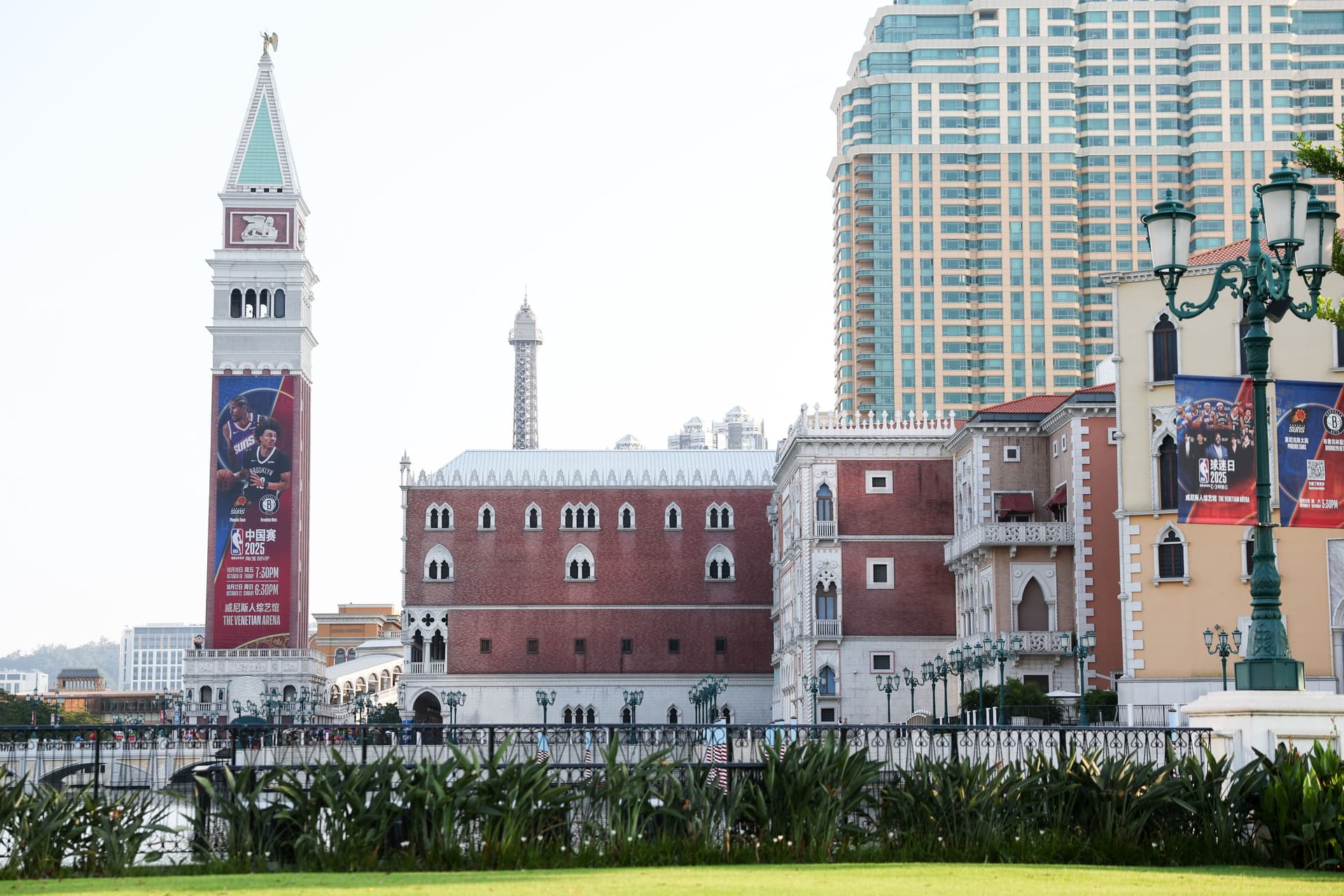
When the Dallas Mavericks and Houston Rockets tip off at the Venetian Arena in Macau today, it will look like a routine preseason trip. It is anything but. Both teams are tied to two of the biggest names in global gambling, and both games are being staged inside a casino resort.[1]
The Mavericks are controlled by Miriam Adelson, the controlling shareholder of Las Vegas Sands. The Rockets belong to Tilman Fertitta, who bought Caesars Entertainment earlier this year in a deal valued at $17.6 billion. Add in the league's looming Las Vegas expansion decision, and this weekend becomes a snapshot of how closely the NBA's growth story is now tied to the gaming industry.
Why Macau has become the NBA's side door into China
Macau is a rare destination on the NBA map. Of the 26 NBA China games played since 2004, only three have been held there, with Beijing, Shanghai and Shenzhen hosting most of the rest.
The first was a 2007 preseason meeting between LeBron James's Cavaliers and Dwight Howard's Magic. The league did not return for 18 years.
That gap is not just about scheduling. In 2019, then Rockets general manager Daryl Morey posted support for Hong Kong's anti-government protesters. Tencent and state broadcaster CCTV pulled Rockets coverage, sponsors walked away, and the Chinese Basketball Association cut ties. The fallout cost the league hundreds of millions in revenue.
The NBA's way back has run through Macau. The Suns and Nets played there last preseason, the league's first games in China for six years. Macau gives the NBA a foothold in the Chinese market with a ready-made, casino-funded venue and a softer political profile than a mainland arena.
There is a neat irony in the Rockets being the team on this trip. The franchise that triggered the 2019 rupture was once China's favourite, thanks to Yao Ming, an eight-time All-Star who later ran the CBA from 2017 to 2024. Its presence in Macau reads like a deliberate signal that the relationship has been repaired.
What Sands needs from a basketball weekend
For Las Vegas Sands, this is as much a marketing campaign as a sporting event.
Patrick Dumont, the Sands CEO who also serves as Mavericks governor, is hosting the week's events at the Venetian Macau. The Mavericks' own coverage frames the trip as a showcase for the resort and its arena, and a way to push both the team and casino brands worldwide.
The commercial backdrop explains the urgency. Sands remains the world's largest casino operator, but its share price has fallen by close to 45% in 2026. Macau's gross gaming revenue has also dropped year on year for four months running, according to the territory's gaming regulator.
Operators will hope that the NBA games, landing straight after the 1 to 7 October National Day Golden Week holiday, extend the tourism lift into the following weekend. That is a lot to ask of two exhibition games. But for an industry that sells experiences rather than just tables, an NBA weekend is premium content.
The venue itself tells a story. The 14,000-seat Venetian Arena was only two months old at the time of the 2007 game and is now close to its 20th birthday. The league calls it NBA-ready, yet it would be the smallest arena in the league by capacity. That matters less for a showcase than for any future talk of regular-season games in Asia.
Star power with a commercial edge
The rosters give the trip real pulling power. Kevin Durant, a two-time Finals MVP, leads the Rockets. Cooper Flagg, the 2025 No. 1 pick and last season's Rookie of the Year, headlines for Dallas.
The most interesting name may be Kyrie Irving. He is set to play his first NBA game in roughly 19 months after tearing his ACL in March 2025. Irving also has a signature shoe and apparel line with Chinese sportswear brand ANTA, so his comeback doubles as a product moment in one of his key markets.
That overlap is the point. Player brands, team brands, casino brands and Chinese consumer brands all meet on one court. For bettors, it also puts early fitness clues on Irving and a first look at Flagg's second season on show before the regular season begins.
Las Vegas: the bigger decision in the background
The Macau trip lands as the NBA moves towards a decision on Las Vegas expansion, expected before the end of the year. ESPN reports three finalist groups, with the combined price of a franchise and new arena put at $12 billion to $13 billion.
Those numbers reshape how the league values itself. Fertitta paid a then record $2.2 billion for the Rockets in 2017; CNBC now values the club at about $6.3 billion.[2] A Las Vegas fee in that range would hand existing owners a large one-off payment and set a new floor for what an NBA team is worth.
It also raises a governance question. When Dallas traded Luka Doncic in February 2025, fans speculated that the Adelsons might move the Mavericks to Las Vegas. The club shut that down quickly, and Sands no longer runs any casinos in the city. Even so, a league where casino owners already control two franchises is about to add a team in the gambling capital of the US.
For Las Vegas, an NBA team would complete a sporting transformation that once seemed impossible. For the league, it would place players, referees and staff in the one city where sportsbooks sit inside almost every major venue. How the NBA manages that proximity will shape public trust in the product.
The integrity paradox
No major US league has leaned into gambling earlier than the NBA. In 2014, Adam Silver used a New York Times op-ed to call for a federal framework for legal sports betting, four years before the Supreme Court struck down PASPA.
That early embrace has come with a cost. The league handed its first lifetime ban to former Raptors forward Jontay Porter in 2024 over a betting scheme. A major illegal betting case involving several former players is now in federal court in New York, and its lead defendant is expected to plead guilty just as the 2026-27 season begins.
Prediction markets add a new layer. The NBA has not signed a deal with any platform, unlike some other US leagues. Yet LeBron James has endorsed Polymarket and Giannis Antetokounmpo has endorsed Kalshi. The league has pressed the CFTC on integrity safeguards, and Silver said in July he would back closer cooperation between leagues and a possible federal betting czar.
So, the NBA is trying to do two things at once. It is courting the money and the markets of the gaming world, from Macau to Las Vegas, while asking regulators to build stronger guardrails around it. Those aims are not contradictory, but they leave the league with little room for another scandal.
What it means for basketball
The wider lesson is that the NBA's international model is shifting from broadcast reach to destination events. A preseason game in a resort arena earns less than a TV deal, but it builds brand loyalty, sells merchandise and gives partners something to host. Casino operators, with their hotels, arenas and global customer bases, are natural partners for that model.
There are three likely knock-on effects:
- China becomes a growth market again. If Macau goes smoothly two years in a row, a return to mainland cities looks more realistic, along with renewed broadcast and sponsorship interest.
- Expansion economics rise. A Las Vegas fee near the reported range would lift valuations across the league and could make further expansion more tempting.
- Integrity becomes a core cost. More gambling-linked ownership, more markets and more prediction platforms mean more monitoring. Expect the league to keep pushing for federal oversight rather than relying on state regulators alone.
For fans, the trade-off is clear. The NBA is bigger, richer and more global than ever. But the closer it gets to the casino floor, the more it has to prove that what happens on the court is beyond question.

Louis Hobbs is the Sports Editor at SportsBoom, overseeing daily coverage across a wide range of sports while shaping the site’s editorial direction and breaking news agenda.
When he’s not editing the website from home or SportsBoom’s London office, Louis can usually be found in the darts or snooker press room. He has covered both sports extensively for SportsBoom, reporting live from venues for over three years and building strong relationships across the professional circuits.
With a background in interviews, exclusives and live event reporting, Louis combines on-the-ground insight with sharp editorial judgement to ensure SportsBoom delivers authoritative, engaging and timely sports journalism.
Comments
0 comments
No comments yet. Be the first to share your thoughts!
References
- 1.igamingbusiness - NBA brings Texas foes to Macau as league nears decision on Las Vegas expansion
- 2.CNBC - NBA Sports Valuations 2026
Related Resources to Betting News
- Maverick Founder Moves To Save Eight Washington Casinos From Closure
- Is New York’s Polymarket Case the Blueprint for a Wider Prediction Market Crackdown?
- 81% Figure Highlights the Growing Fraud Prevention Challenge for Gambling Operators
- Is Sydney Sweeney's Novig Campaign a Masterstroke or a Misfire?
- How One Bonus-Abuse Network Created $3.2m in Fraud Exposure
- Which US States Have Banned Prediction Markets
- Prediction Markets' 16-Fold Volume Surge Shows Why Sportsbooks Should Be Worried
- DraftKings’ Four-State Prediction Push Reveals Its Bigger US Market Bet
- MLB’s Polymarket Exclusivity Tested as Five Teams Partner With Kalshi
- Which US States are Posting the Biggest Gambling Revenue Gains in 2026
- Colorado Introduces New Betting Protection Law: Which States Will Follow Next?
- New York's Sports Betting Tax Take Jumped $50M After World Cup Results Favoured the Books
- Prediction Markets Gain Sportsbook-Level Legitimacy as Genius Sports Strikes Polymarket and Kalshi Deals
- Could Real-Time Statistics Change How Americans Bet on Sports?
- U.S. Sportsbooks Are Likely to Break Their All-Time Hold Record This Summer
- Has Live Betting Become More Popular Than Pre-Match Betting?
- Why Fast Rewards Drive Online Gambling Growth
- The reason why U.S. Betting Operators are becoming Media Ecosystems
- Are Branded Slot Games Still Effective at Attracting New Players?
- Simplicity Over Value: Why Casual Bettors Accept Worse Odds