
Betting News
Is New York’s Polymarket Case the Blueprint for a Wider Prediction Market Crackdown?
New York’s legal battle with Polymarket could provide a blueprint for other states challenging prediction markets, with experts examining regulation, users, compliance and sponsorship risks.

SportsBoom offers honest and impartial bookmaker reviews to help you make informed choices. While we may earn commissions through affiliate links, our content remains independent and free from promotional influence. For more information, see our Content Transparency and How We Review pages.
Credit: Getty Images
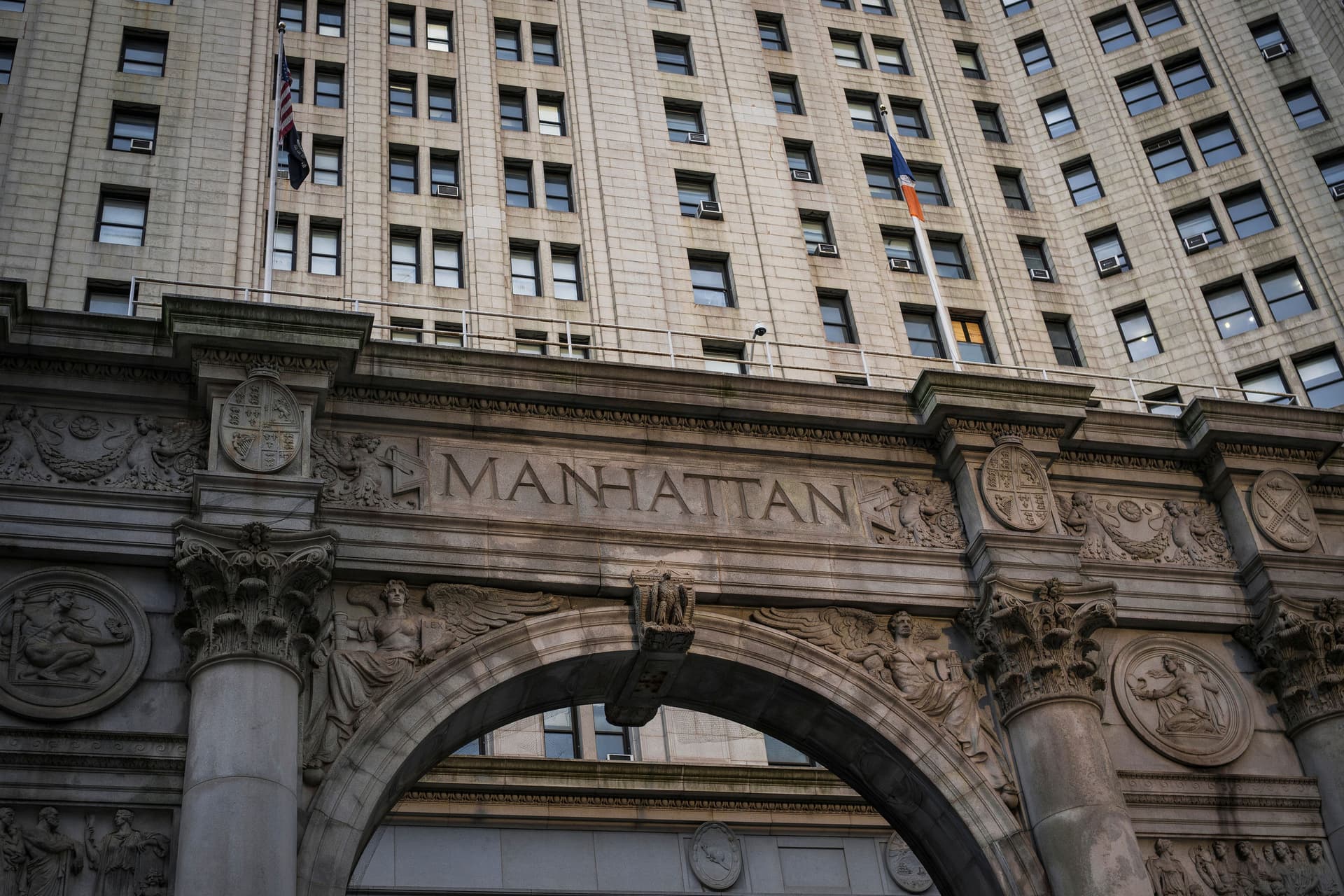
New York's Attorney General is asking a court to shut down Polymarket's operations and order fines and restitution, alleging the prediction platform has been running unlicensed gambling.
In an exclusive interview with SportsBoom, Luke Kushner, an attorney in the New York office of Mandelbaum Barrett PC, explains why the State is going in hard, what it could mean for Polymarket's users, and why sponsors and partners should be checking their contracts now.
The case is the latest flashpoint in the fight over who regulates prediction markets. Polymarket's US exchange is supervised by the Commodity Futures Trading Commission, and like other event contract platforms, it argues that federal oversight displaces state gambling law. New York says its licensing rules, and the consumer protections that come with them, still apply.
Kushner says the way New York has built its case tells you a great deal about where this is heading.
How aggressively is New York pursuing Polymarket?
New York is not just asking for an injunction. It wants fines and restitution too. Asked what that signals, Kushner did not hesitate.
“Very aggressively. You can see it in what the State actually did,” Kushner told SportsBoom.us in an exclusive interview.
He points first to the depth of the State's investigation.
“First, this was a real investigation. The Attorney General says her investigators placed more than 10,000 bets on Polymarket's app. They also documented specific trades from New York accounts: a Mets game, a Big Brother contestant, and a day over the $5,000 bookmaking threshold. You don't build that kind of record unless you plan to go all the way.”
The urgency of the filing, and the bureau behind it, are also telling.
“Second, the State came in on an emergency basis. It asked for a temporary restraining order backed by a sworn 'affirmation of emergency' from the head of the Investor Protection Bureau. That affirmation says the violations are ongoing and harm New Yorkers every day. The choice of bureau is telling in itself. The State is treating this as a markets and investor-protection case, not a routine gaming license issue.”
Then there is the scale of what New York is asking for.
“Third, look at the remedies. Restitution, disgorgement, triple the company's gains, per-offering penalties, and an accounting of every customer. The State is also asking to enjoin Polymarket's 'principals, agents, and employees,' not just the company. So far the State hasn't named any individuals or filed criminal charges. But the case is built on criminal statutes as Executive Law § 63(12) allows the Attorney General to bring a civil enforcement action based on conduct that allegedly violates criminal statutes. Further, the State says good-faith belief in legality is no defense. That keeps pressure on the people running the company, too.”
Where does it go from here?
“I expect New York to fight hard to get the case back to state court, where Executive Law § 63(12) gives it a fast, summary process (Polymarket moved the case to federal court the same day it was filed). And I expect it to litigate the preemption question rather than back off. New York also isn't acting alone. Massachusetts already won an injunction against Kalshi, and the CFTC is suing New York to defend its own jurisdiction. This is one front in a national fight, and New York clearly wants to be a leader in it.”
Kushner does not expect the case to reach trial.
“My best guess is this ends in a negotiated resolution, not a trial. That would likely include a monetary payment, New York–specific restrictions like age limits and no New York college markets, and some form of customer remediation. But the State has built this case, so it doesn't need to settle, and Polymarket knows that.”
Has New York done this before?
It has, and the precedent is the daily fantasy sports industry.
“New York has done this before. In 2015 the Attorney General used this same statute, Executive Law § 63(12), against the daily fantasy sports companies and won a preliminary injunction. It's one of the most powerful tools any state AG has. It's built for speed: the case proceeds 'with the ease, speed and economy of a mere motion', and the State doesn't have to prove irreparable harm to get preliminary relief. The State also put the industry on notice with an alert about prediction markets earlier this year.”
This time, though, Polymarket has changed the venue.
“The State isn't in its home court. Polymarket moved the case to federal court the same day it was filed, so the state judge can't act unless the case is sent back. The first fight will be about where the case is heard. Polymarket is arguing, among other things, that as a CFTC-supervised exchange it effectively acts under a federal agency. That argument doesn't depend on the federal Wire Act claim, so the State can't simply drop that claim to get back to state court.”
Once that is settled, the courts face the question at the centre of the whole prediction markets debate.
“After that, the real question is whether federal commodities law pre-empts New York's gambling laws, and the courts are split. By the AG's own account, the Ninth Circuit rejected pre-emption, the Third Circuit accepted it, and a federal judge in Manhattan ruled against Kalshi in a similar case that's now before the Second Circuit. The Second Circuit's decision may matter more than anything the trial court does here. Realistically, we're looking at months, not weeks.”
What would an injunction mean for Polymarket and its users?
If the court grants an injunction, Kushner says the operational changes are clear, and the tools to make them already exist.
“On the operational side, Polymarket would have to identify and wall off New York users. That means real location verification, the kind licensed New York sportsbooks already have to do. It would also mean raising the minimum age from 18 to 21 for those users and pulling New York–targeted advertising, including anything on or aimed at college campuses. Polymarket's own customer agreement already lets it block users by jurisdiction, so the mechanics exist.”
The bigger issue, he says, is how far the order would reach.
“The harder problem is that the proposed order doesn't just cover business with New Yorkers. It covers business conducted 'within or from New York', and Polymarket's principal place of business is in New York. Read literally, that could reach the company's operations nationwide, not just its New York customers. That's where the real fight over scope would be.”
What happens to open positions?

“As for New Yorkers with open positions, the proposed order is silent. Polymarket's own terms give it options. It can move accounts to 'liquidation-only,' which lets people exit but not open new positions. It can close and settle positions if an account is terminated. In emergencies, it can cancel contracts and return the money. I'd expect an orderly wind-down, not an overnight freeze. Any forced unwinding on a federally regulated exchange would also bring the CFTC into the picture.”
Luke Kushner, an attorney in the New York office of Mandelbaum Barrett PC
Who could restitution cover, and how would it be calculated?
Restitution usually implies that someone has been harmed. Kushner explains that New York's theory of harm is broader than fraud.
“The State isn't claiming Polymarket defrauded anyone in the traditional sense. Its theory is that every dollar wagered on an unlicensed platform was wagered illegally, without the protections New York requires. So, I'd expect restitution to track customer losses and the fees Polymarket collected. That's why the State is demanding an accounting that identifies every customer, what they bet, what they lost, and what Polymarket earned. On top of that, it wants profits disgorged and a penalty of three times Polymarket's gain.”
He believes the scope of who is covered is being overlooked.
“The part people may be missing is who's covered. The AG argues this statute lets her recover for people outside New York when the conduct happened in New York. Polymarket is headquartered here, so that could extend to its customers nationwide. That's potentially a much bigger number than the headline penalties, which are capped at $5 million per transaction or occurrence.”
That does not mean the figures will be straightforward.
“Expect a real fight over the math, though. Restitution normally means returning money to people who were harmed. Here, some customers won. Whether and how winnings get offset against losses is going to be hotly contested.”
Could AML, KYC and compliance problems follow?
Licensing is the focus of the complaint, but Kushner warns it may not stay that way.
“They're not in the complaint today, but I wouldn't assume they stay out of the case.”
Polymarket's regulatory history is part of the reason.
“Start with the history. Polymarket's original platform settled with the CFTC in 2022 for offering unregistered event contracts, paid a civil penalty, and agreed to keep U.S. users off the site. The U.S. business in this lawsuit is a separate entity. It got CFTC approval as a designated contract market in July 2025. So legally, it starts with a cleaner slate. Practically, regulators don't forget. A company that once operated around the U.S. regulatory perimeter will get less benefit of the doubt when it says its controls are working.”
The accounting New York is demanding could itself expose new problems.
“Second, the lawsuit itself could open a compliance front. The State is asking for an accounting that identifies every customer, what they bet, and what they lost. That's a customer-level look at Polymarket's books. If it turns up weak identity checks, accounts funded by third parties, underage users, or activity from people who shouldn't have been on the platform, those facts can become a second set of problems. That could come from New York, the CFTC, or banking and payments partners.”
Some of those issues, he says, are already visible.
“Third, some of those issues are already visible. Polymarket's own terms say anyone 18 or older can trade, while New York requires 21 for sports wagering. Polymarket's rulebook does have real anti-money-laundering controls. There's PATRIOT Act identity verification, a ban on funding accounts through third parties to evade those controls, and sanctions blocking. But having policies on paper is different from showing they work, and an accounting tests that.”
Market integrity is the final risk.
“Finally, there's market integrity. Polymarket lists contracts on elections, reality TV and college sports. In those markets, someone with inside knowledge, like a production staffer or someone close to a team, can have a real edge. The rulebook bans trading on non-public information. If a trading pattern suggests insider activity got through, that becomes an enforcement issue for the CFTC, whatever happens with New York's licensing claims.”
“So, the short answer is that licensing is the headline today. But the discovery New York is demanding is exactly how compliance problems come to light, and given the company's history, regulators will be looking.”
What should the rest of the industry take from this?
Kushner is clear that this case reaches well beyond Polymarket. For rival exchanges, a CFTC licence offers less protection than many assume.
“For other prediction markets, the message is that a CFTC license is a defense you'll have to litigate, not a safe harbor, at least in New York and at least until the Second Circuit weighs in. The AG is already pointing to the Manhattan federal court's ruling against Kalshi. Nothing in this complaint is unique to Polymarket. Any exchange offering sports contracts to New Yorkers should assume the same theory applies to it,” he added.
The sponsorship risk
For teams, leagues and media companies, the exposure comes through promotion.
“For teams, leagues, media companies and sponsors, the underappreciated risk is the promotion angle. New York law prohibits advertising or promoting an unlicensed sports wagering platform to people in the state. The criminal statute reaches anyone who materially aids gambling, including by soliciting participants. The State made a point of highlighting Polymarket's deal as the New York Rangers' 'Official & Exclusive Prediction Market Partner'. If I were a partner, I'd be looking at my contracts, my indemnities, and any campaigns aimed at New York audiences right now.”
Where licensed sportsbooks stand
“Licensed sportsbooks are, in a sense, the State's constituency in this case. New York taxes mobile sports betting at roughly 51% of gross revenue, and protecting that regulated market is a big part of what's driving this. A licensed sportsbook that partners with a prediction market should think hard about how that looks to the regulator that controls its license.”
Luke Kushner, an attorney in the New York office of Mandelbaum Barrett PC
The fixes that can be made now
Kushner's practical advice applies across the board.
“The practical advice for everyone is the same. Some of the State's strongest facts are fixable: letting 18-to-20-year-olds trade, and offering markets on New York college teams. Both are prohibited even for licensed New York sportsbooks. You can clean those up today without waiting to see who wins the preemption fight.”

Meet Louis Hobbs, our resident sports guru with a knack for all things darts and snooker. His expertise goes beyond the ordinary, offering deep insights that set him apart. Louis also has a strong passion for US sports, particularly basketball and American football.
Comments
0 comments
No comments yet. Be the first to share your thoughts!
Related Resources to Betting News
- 81% Figure Highlights the Growing Fraud Prevention Challenge for Gambling Operators
- Is Sydney Sweeney's Novig Campaign a Masterstroke or a Misfire?
- How One Bonus-Abuse Network Created $3.2m in Fraud Exposure
- Which US States Have Banned Prediction Markets
- Prediction Markets' 16-Fold Volume Surge Shows Why Sportsbooks Should Be Worried
- DraftKings’ Four-State Prediction Push Reveals Its Bigger US Market Bet
- MLB’s Polymarket Exclusivity Tested as Five Teams Partner With Kalshi
- Which US States are Posting the Biggest Gambling Revenue Gains in 2026
- Colorado Introduces New Betting Protection Law: Which States Will Follow Next?
- New York's Sports Betting Tax Take Jumped $50M After World Cup Results Favoured the Books
- Prediction Markets Gain Sportsbook-Level Legitimacy as Genius Sports Strikes Polymarket and Kalshi Deals
- Could Real-Time Statistics Change How Americans Bet on Sports?
- U.S. Sportsbooks Are Likely to Break Their All-Time Hold Record This Summer
- Has Live Betting Become More Popular Than Pre-Match Betting?
- Why Fast Rewards Drive Online Gambling Growth
- The reason why U.S. Betting Operators are becoming Media Ecosystems
- Are Branded Slot Games Still Effective at Attracting New Players?
- Gamification in Online Casinos: Where Games and Gambling Converge
- Simplicity Over Value: Why Casual Bettors Accept Worse Odds
- Why Power Laws Rule the Sports Betting Industry