
Betting Academy
How Loss Aversion Affects NFL Bettors When They Lose bets in the 4th Quarter
You have gotten to the last half of the game. 2 minutes on the clock. The Chiefs are at -6.5, leading by 10. As anyone would be, you think that’s victory in the bag, but boy, are you wrong. Out of nowhere, Andy Reid calls a timeout, and he stops the clock. The result: Chiefs lead by 7. You won!

SportsBoom offers honest and impartial bookmaker reviews to help you make informed choices. While we may earn commissions through affiliate links, our content remains independent and free from promotional influence. For more information, see our Content Transparency and How We Review pages.
Why Losing an NFL Bet Late Feels Twice as Bad as Winning
In another scenario, same game, same spread, Kansas City fumbled at the 20. When they did, the Cowboys scored. The final score is Chiefs by 4, and you did not win.
The difference between the emotions you feel when you win and when you lose has a name.
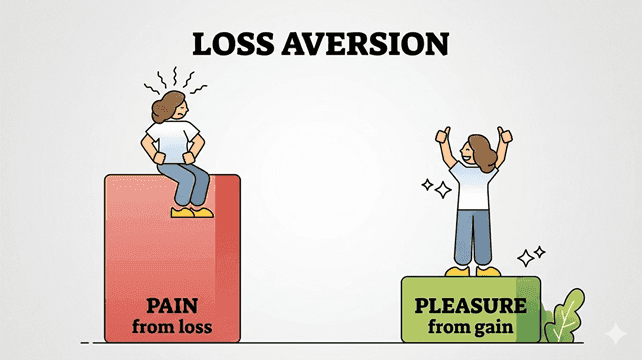
Caption: An abstract representation of loss aversion in betting
Definition of Loss Aversion
Loss aversion is a feeling many experience; most just don’t have the right word for it. Simply put, it hurts deeper to lose than to win. The emotion is stronger when you lose than when you lose.
Every time I win $100, I am happy. When I lose $100, I feel worse. Now, when you try to equate the “happiness” and the “sadness,” the latter is heavier. [1] This pain of losing has been proven to be a driver of decision-making, and it’s rampant in betting. Whether this is making decisions about how much to bet on slot machines, when you're betting on the NBA or any other type of wager like NFL betting. [2]
The Pain of Loss vs. The Joy of Gain
Here’s something I realized about these two, starting with the joy of gain.
Whenever I win, I celebrate. But after a while, that excitement dies down. The pain of loss vs the joy of gain hits different. When I lose, I ruminate on what I would have done differently. I constantly ask myself a lot of "Should've, could've, would've" questions and run through multiple what-if scenarios. And in no time, that feeling has lingered longer than it should.
The Emotional Bankroll Problem
Money does not equal emotional bankroll. Your emotional bankroll is how you feel (and think) right before you place a bet. When you lose late, it hurts more than if it happened earlier. This hurt is sometimes accompanied by feelings of guilt.
One time, I lose 3 times at the beginning of a game. And in another game, I lost a bet with 90 seconds left until the final whistle. This last scenario had me questioning if online betting is really something I should be doing.
Many bettors find themselves in this predicament as I did. And unfortunately, some can’t resist the “one more time” voice inside their heads. In an attempt to “recover” in this state of mind, when placing another bet, your emotions can get the best of you.
Enter Recovery Betting: Where It All Breaks Down
You placed a big bet, over $500, and you lost it. Then you go ahead and even place a bigger one, hoping to recover what you've lost and what you’ve just invested. If you are lucky, you win, but you can also lose again. Sometimes this cycle gets destructive.
This cycle of betting to recover is called recovery betting.
Recovery betting has 3 consequences that only add risk, minus the guarantee of winning. You:
- Bet more money
- Wager on bets with higher odds
- Bet often [3]
This cycle clouds your mind that you are having debt you can pay off, while essentially, you are draining your resources to keep things moving.
The Grounded Response
Don’t ignore loss aversion. If you do, you’ll find yourself in a destructive cycle of chasing losses. If you like sports betting, be especially careful: live betting can be fun but also costly. [2]
As a rule of thumb: bankroll first. Set a limit on how much you are willing to bet per bet and per session. Beyond that, also set a cap on how much you are willing to lose.

Mitchelle is a skilled iGaming writer who is passionate about creating precise, trustworthy, and well-researched casino content. She specializes in gambling, betting, casino, and iGaming content. She has extensive experience working with leading writing agencies and gaming platforms. Her main focus is creating fact-based content across reviews, guides, and betting insights.
Comments
0 comments
No comments yet. Be the first to share your thoughts!
References
- 1.Predicting the Behavioural Tendency of Loss Aversion - PMC / National Institutes of Health. Peer-reviewed research on loss aversion behavior.. Accessed May 8, 2026
- 2.In-Game Emotions and Their Effect on NFL Betting Choices - Russell Street Report. Sports betting analysis.. Accessed May 8, 2026
- 3.Multidimensional Loss Chasing among Online Gamblers - : PMC / Journal of Gambling Studies. Peer-reviewed research on loss chasing patterns.. Accessed May 8, 2026
Related Resources to Betting Academy
- Why NFL Betting Is Bigger Than Every Other US Sport Combined
- Why Do Betting Odds Change After Bet Placement?
- Instant Wins Games and NFL Bettors: Why the Speed Is the Point
- Can AI Accurately Guide Your Betting?
- How Discord & Twitter Groups Shape NFL Betting in 2026
- NFL Crash Games: Why the Cash Out is a Two-Minute Drill Win
- NFL Bettors Are Moving to Online Slots: The Science Behind the "Hybrid" Shift
- How Weather Changes NFL Betting Odds and Game Outcomes
- Cash-Out Strategy: When to Lock In Profit or Let Your NFL Parlay Run
- Player Props Betting Explained: Odds, Strategy & How It Works
- Buffett Warns Sports Betting Lets Governments Cash In on the Naïve
- The CFTC Takes 5 States To Court Over Prediction Markets & Betting
- Buenos Aires Blocks 251 Unlicensed Online Betting Platforms in Sweeping Regulatory Crackdown
- Responsible Gambling USA: Setting Limits on Betting Apps
- NFL Betting Guide: How to Enjoy the Playoffs & Super Bowl on a Budget
- Parlay Betting Explained: Hidden Vig, EV & Real Profit Math
- What does “Free Bet” Mean in Gambling Marketing?
- Teaser Betting Explained: Odds, Spreads & Strategy
- Here’s how a Hamstring Injury During an NFL Game Impacts Spread
- How Online Casino Games Can Keep NFL Bettors Engaged Between Games