
Betting Academy
Cracking the First Touchdown Scorer Market
First touchdown scorer props require you to predict a player not only to score but also to score the opening game’s TD. Because of the complexity, even sportsbooks struggle to model it. And since it’s a relatively niche prop in the broader market, many books would rather widen the margin than invest extra time refining the pricing.
In this piece, I’ll walk through how sportsbooks construct first touchdown odds, which variables move the needle, and how my model identified value bets in Super Bowl 60.

SportsBoom offers honest and impartial bookmaker reviews to help you make informed choices. While we may earn commissions through affiliate links, our content remains independent and free from promotional influence. For more information, see our Content Transparency and How We Review pages.
First Touchdown Scorer Betting Explained
How the Book Builds the Number
First touchdown scorer odds aren’t pulled out of thin air. The books start with an overall picture of the game and look at first-quarter and second-quarter scoring tendencies of both teams and model total touchdowns.
They then distribute the expected scoring across individual players using usage data such as red-zone touches, goal-line carries, target share inside the 20, and historical conversion rates by role. Once each player is assigned a “true” probability, the sportsbook then throws on its vig to guarantee a profit.
First touchdown scorer markets are pricey. One breakdown I read pinned the average vig at 19.1%, nearly four times higher than a typical side bet. [1] However, don’t get spooked by the margin. Sportsbooks do this because they lack confidence in their model to predict the outcome. If you focus on the variables I’ll break down later, you can get some amazing odds on players.
Key First TD Scorer Props Variables
Red zone target share is the foundation, but not every red zone target is worth the same. League data on red zone targets shows a target from the 1-yard line carries roughly 1.8 times the scoring value of a target from the 10-yard line and 2.2 times the value of one from the 19. [2]
My model weights each target by distance from the goal line, most people focus on raw volume. Two players with 12 red zone targets on their season stat line can carry different touchdown equity depending on where those targets actually came from.
Position-specific conversion baselines are the next factor. Across the league, the average red zone target converts to a touchdown roughly 24.5% of the time. Tight ends convert above that baseline, at close to 29.6%, and when the target is specifically in the end zone, the tight end conversion rate climbs to roughly 41.8%.
Barner caught 9 of his 12 red zone targets and scored on 5 of them, a 41.7% touchdown rate per red zone target. As that conversion rate is close to the league average, you can expect it to hold rather than regress.
Run that through the actual math against the market. Barner's +1200 price implies a probability of 7.7% (100 ÷ 1,300). If I project a conservative two red-zone-target game for him, which is reasonable given his season rate of 0.71 red zone targets per game across 17 contests, and apply his demonstrated 41.7% per-target conversion rate, the model lands close to 30% before any further haircut for game-script uncertainty.
Compare that to Kupp with 7 of 12 red zone targets caught, but only 2 touchdowns, a 16.7% conversion rate, well below the 24.5% league baseline. His bet wasn't banking on a strong conversion rate but on his target share climbing from 16% to 22% in the playoffs. That's a thinner value than Barner's, which is exactly why it got half the stake and the longer price.
Defensive funnel data is the last input, and it's a multiplier on the player-level number. New England allowed touchdowns on 67.5% of red zone drives against them. This raises the conversion rate I'd apply to any Seahawks red zone look, Barner's included.
Case Study One - George Holani at +475
Heading into Super Bowl 60, Kenneth Walker III was the unquestioned lead back for Seattle and the betting favorite in both TD markets. But Zach Charbonnet's season-ending ACL injury in the divisional round meant Holani, who was previously buried on the depth chart, inherited the clear RB2 role.
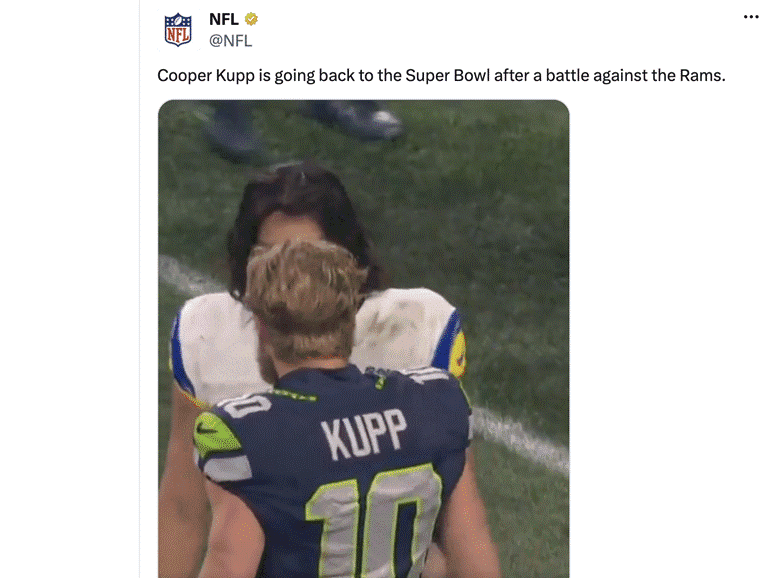
Credit: NFL Official Site – Screenshot captured by Chad Nagel on 23 June, 2026
In the NFC Championship Game the week prior, Holani logged six total touches for 31 yards, his heaviest workload since Week 10, including a 13-yard catch-and-run that set up a Seattle score, while playing a 34% snap share as Walker's backup. [3]
This type of usage spike is the kind of role signal that should move a model's number more than the market's, because public bettors anchor on season-long stat lines rather than the most recent depth-chart shakeup.
Independent handicappers landed on the same logic ahead of kickoff, flagging Holani's expanded dual-threat role behind Walker as the source of value at +475. [4] The bet was a prediction that Holani’s change-of-pace role carried more red zone equity than a 22-carry, 73-yard regular season suggested on its face.
Case Study Two - AJ Barner at +1200
This was the highest-conviction value play of the three, even at the smaller $50 stake, because it combined two of my top variables, red zone volume and red zone efficiency.
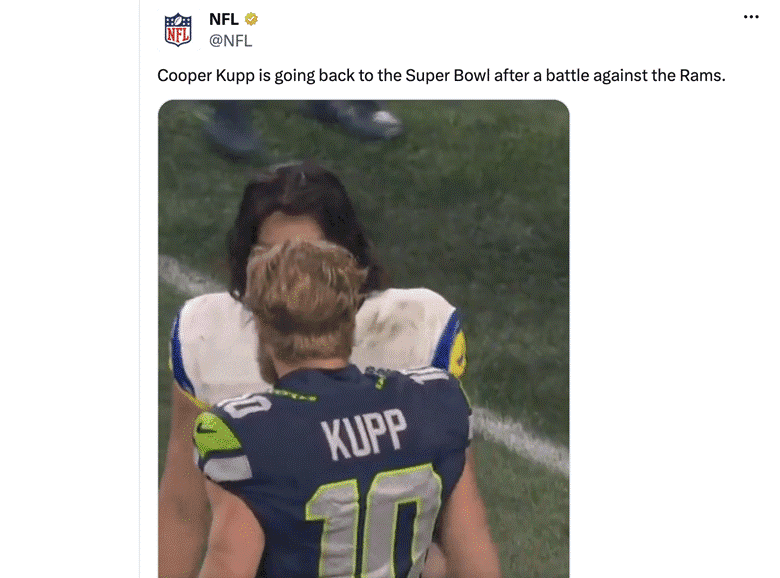
Credit: NFL Official Site – Screenshot captured by Chad Nagel on 23 June, 2026
Barner finished the regular season tied with Cooper Kupp for second on the team with 12 red zone targets, but he converted nine of those twelve into catches and five into touchdowns, while Kupp converted seven of twelve catches into just two scores. [5]
This shows that Seattle's offense treated Barner's catch radius as a near-automatic finisher once the ball got near him in tight spaces, something Barner's 6-foot-6 frame and a regular-season 52-catch, 519-yard, six-touchdown line on 68 targets supports. [6]
New England's defense, meanwhile, was a textbook funnel matchup. They allowed touchdowns on 67.5% of red zone drives against them, the third-worst rate in the league, even though they limited the overall number of red zone trips opponents got. [7]
A defense that bends but rarely breaks until it's actually in the red zone is the matchup an efficient red zone tight end should exploit, and the market's +1200 price wasn't fully crediting that.
Case Study Three - Cooper Kupp at +1300
This was the calculated speculative leg, and I sized it accordingly. Kupp's regular-season role was modest by his own standard, with fewer than one red zone target per game and only two touchdowns on the year. But his playoff usage had expanded, with his target share climbing from roughly 16% in the regular season to 22% in the postseason and his route participation rising to 23.4%. [8]
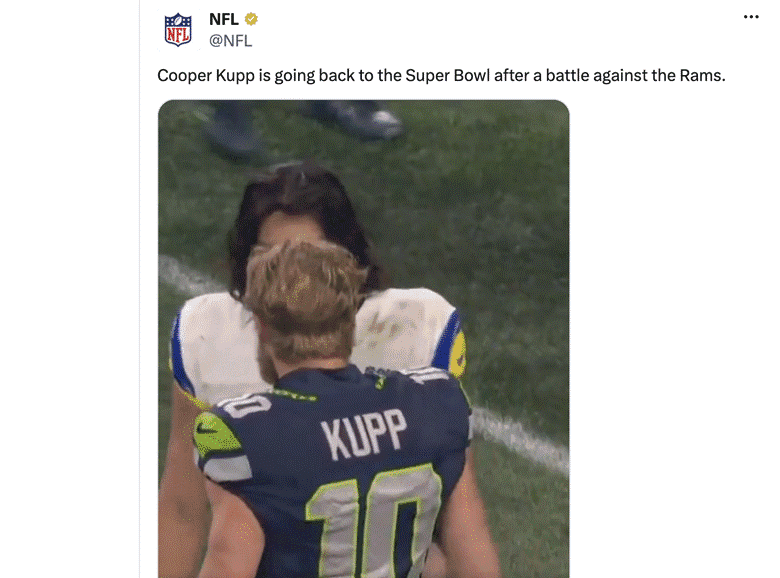
Credit: NFL Official Site – Screenshot captured by Chad Nagel on 23 June, 2026
Running backs score roughly 40-45% of all first touchdown outcomes leaguewide, the highest rate of any position group, which is part of why pure receiver bets at long odds need a real usage trend behind them rather than name recognition. [9] Kupp fit the bill. He didn't have a long red zone target history to lean on, which is why this was my smallest stake and longest price of the three.
What My Stakes Tell You About Conviction
Look at how I sized my bets: $100 on Holani and $50 each on Barner and Kupp. Holani had the most concrete, recent, role-confirmed signal with a backfield vacancy created by an injury, validated by actual touches the week before.
Barner had the best efficiency math of the three, but tight end touchdown props always carry some game flow randomness.
Kupp had the longest odds and the thinnest red zone sample, so he got the smallest stake even though his payout multiple was the largest. When making first TD props, you must size your bet to the strength of your signal.
In the actual game, Barner caught four passes for 54 yards, including a wide-open 16-yard touchdown in the fourth quarter that was, in fact, the very first touchdown of the entire contest, cashing the anytime bet outright while also illustrating exactly the kind of red zone mismatch the pregame model flagged. [10]
Holani didn't find the end zone, with Walker absorbing almost all of Seattle's goal-line work en route to a 27-carry, 135-yard, Super Bowl MVP performance. Kupp finished with six catches for 61 yards but no touchdown, as Seattle's lone red zone trip that featured him stalled into a field goal. [11]
Two of three legs missed, but the one hit returned twelve times the stake, turning a $200 total outlay into a net profit.
Before You Place a First Touchdown Scorer Bet
First touchdown odds overweight season-long volume, underweight role shifts, and smooth over efficiency differences inside the red zone.
To capitalize on these trends , look for players whose red-zone touches are clustered near the goal line, whose position naturally carries above-average conversion rates, and whose role has recently expanded or changed.

Chad Nagel is a passionate sports fanatic who has worked in the sports and betting industry for over a decade. He spent most of his career as an editor-in-chief for Soccer Betting News, South Africa’s leading soccer betting newspaper, owned by Hollywoodbets. His articles have also featured in some of the most respected sports media platforms in the world, such as SPORTbible, Sports Illustrated, Combat Sports UK, and many others.
Comments
0 comments
No comments yet. Be the first to share your thoughts!
References
- 1.Player Props: Understanding the Math Behind the Lines - Wizard of Odds. Published December 1, 2025.. Accessed June 21, 2026
- 2.NFL Red Zone Stats Vs. Expectation: Tight Ends - Sharp Football Analysis. Published October 4, 2023.. Accessed June 21, 2026
- 3.George Holani, Seattle Seahawks, RB - Fantasy Football News, Stats - CBS Sports.. Accessed June 21, 2026
- 4.First & Anytime Touchdown Scorer Bets: Super Bowl 60 - Sharp Football Analysis. Published February 8, 2026.. Accessed June 21, 2026
- 5.Best Super Bowl Anytime Touchdown Scorer Prop Bets - RotoWire. Published February 8, 2026.. Accessed June 21, 2026
- 6.AJ Barner NFL Stats & News - RotoWire.. Accessed June 21, 2026
- 7.Final Red Zone Plus/Minus Rankings for 2025 NFL Season: NFC West Dominates - Yahoo Sports. Published January 7, 2026.. Accessed June 21, 2026
- 8.Cooper Kupp Prop Bets: Super Bowl 60 Analysis & Breakdown - Sharp Football Analysis. Published February 6, 2026.. Accessed June 21, 2026
- 9.Early Super Bowl 60 Touchdown Props - Sports Betting Dime. Published January 29, 2026.. Accessed June 21, 2026
- 10.Seahawks at Patriots Super Bowl LX Box Score - Seattle Seahawks Official Site.. Accessed June 21, 2026
- 11.Seahawks 29-13 Patriots (Feb 8, 2026) Final Score - ESPN.. Accessed June 21, 2026
Related Resources to Betting Academy
- UFC Betting Strategies: How to Find Value in Fight Odds
- MLS Betting Strategies
- How Quarter and Half Betting Works: Full Breakdown
- How to Use Alternate Spreads for Better Value
- How Second Chance Bets Work: The Expert Playbook for 2026
- Top NBA Betting Strategies Based On Academic Research
- How to Hedge a Sports Bet: Formula, Examples & Profit Calculator
- The Ultimate Guide to Cover Betting in the USA in 2026
- What is Same Game Multi (SGM) Betting?
- Player Bet Builder
- Why NFL Betting Is Bigger Than Every Other US Sport Combined
- Why Do Betting Odds Change After Bet Placement?
- How Loss Aversion Affects NFL Bettors When They Lose bets in the 4th Quarter
- Instant Wins Games and NFL Bettors: Why the Speed Is the Point
- Can AI Accurately Guide Your Betting?
- How Discord & Twitter Groups Shape NFL Betting in 2026
- NFL Crash Games: Why the Cash Out is a Two-Minute Drill Win
- NFL Bettors Are Moving to Online Slots: The Science Behind the "Hybrid" Shift
- How Weather Changes NFL Betting Odds and Game Outcomes
- Cash-Out Strategy: When to Lock In Profit or Let Your NFL Parlay Run